- English
- French
- German
- Portuguese
- Spanish
- Russian
- Japanese
- Korean
- Arabic
- Greek
- German
- Turkish
- Italian
- Danish
- Romanian
- Indonesian
- Czech
- Afrikaans
- Swedish
- Polish
- Basque
- Catalan
- China
- Taiwan China
- Esperanto
- Hindi
- Lao
- Albanian
- Amharic
- Armenian
- Azerbaijani
- Belarusian
- Bengali
- Bosnian
- Bulgarian
- Cebuano
- Chichewa
- Corsican
- Croatian
- Dutch
- Estonian
- Filipino
- Finnish
- Frisian
- Galician
- Georgian
- Gujarati
- Haitian
- Hausa
- Hawaiian
- Hebrew
- Hmong
- Hungarian
- Icelandic
- Igbo
- Javanese
- Kannada
- Kazakh
- Khmer
- Kurdish
- Kyrgyz
- Latin
- Latvian
- Lithuanian
- Luxembou..
- Macedonian
- Malagasy
- Malay
- Malayalam
- Maltese
- Maori
- Marathi
- Mongolian
- Burmese
- Nepali
- Norwegian
- Pashto
- Persian
- Punjabi
- Serbian
- Sesotho
- Sinhala
- Slovak
- Slovenian
- Somali
- Samoan
- Scots Gaelic
- Shona
- Sindhi
- Sundanese
- Swahili
- Tajik
- Tamil
- Telugu
- Thai
- Ukrainian
- Urdu
- Uzbek
- Vietnamese
- Welsh
- Xhosa
- Yiddish
- Yoruba
- Zulu
How does Grade 5 Titanium Alloy Bar ASTM Standard perform in aerospace?
Grade 5 Titanium Alloy Bar, conforming to ASTM standards, and Grade 5 Titanium Alloy Bar ASTM Standard has become an indispensable material in the aerospace industry due to its exceptional performance characteristics. This high-strength, low-weight alloy, also known as Ti-6Al-4V, offers a unique combination of properties that make it ideal for critical aerospace applications. The aerospace sector demands materials that can withstand extreme conditions while maintaining structural integrity and minimizing overall weight. Grade 5 Titanium Alloy Bar meets these requirements with its excellent strength-to-weight ratio, superior corrosion resistance, and ability to perform under high temperatures. As the industry continues to push the boundaries of aircraft design and performance, the role of Grade 5 Titanium Alloy Bar has become increasingly prominent, finding its way into various components of modern aircraft, from structural elements to engine parts.
What are the key properties of Grade 5 Titanium Alloy Bar that make it suitable for aerospace applications?
Exceptional Strength-to-Weight Ratio
Grade 5 Titanium Alloy Bar ASTM Standard excels in aerospace applications primarily due to its remarkable strength-to-weight ratio. This property is crucial in the aviation industry, where every gram of weight saved translates to improved fuel efficiency and performance. The alloy's high tensile strength, typically around 950 MPa, combined with its low density of 4.43 g/cm³, allows engineers to design lightweight yet robust components. This characteristic enables the construction of aircraft structures that can withstand the immense forces experienced during flight while simultaneously reducing the overall mass of the vehicle. The use of Grade 5 Titanium Alloy Bar in critical parts such as landing gear components, wing structures, and fasteners contributes significantly to the aircraft's overall weight reduction without compromising on structural integrity.
Superior Corrosion Resistance
Another key property that makes Grade 5 Titanium Alloy Bar ASTM Standard highly valuable in aerospace is its exceptional corrosion resistance. Aircraft are exposed to a wide range of corrosive environments, from high-altitude atmospheric conditions to potentially corrosive fluids used in various systems. The alloy's ability to form a stable, protective oxide layer on its surface provides excellent resistance against corrosion, even in aggressive environments. This inherent corrosion resistance extends the lifespan of components, reduces maintenance requirements, and enhances the overall safety and reliability of aerospace systems. The use of Grade 5 Titanium Alloy Bar in areas prone to corrosion, such as hydraulic systems, fasteners, and structural components exposed to the elements, ensures long-term durability and performance.
High Temperature Performance
The aerospace industry often deals with extreme temperature conditions, particularly in engine components and areas affected by aerodynamic heating. Grade 5 Titanium Alloy Bar ASTM Standard demonstrates excellent performance at elevated temperatures, maintaining its strength and structural integrity up to about 400°C (752°F). This high-temperature capability makes it an ideal material for components in jet engines, exhaust systems, and other areas exposed to heat. The alloy's ability to resist creep and maintain its properties at high temperatures ensures reliable performance and safety in critical aerospace applications. Additionally, its low thermal expansion coefficient helps maintain dimensional stability in components subjected to temperature fluctuations, further enhancing its suitability for aerospace use.
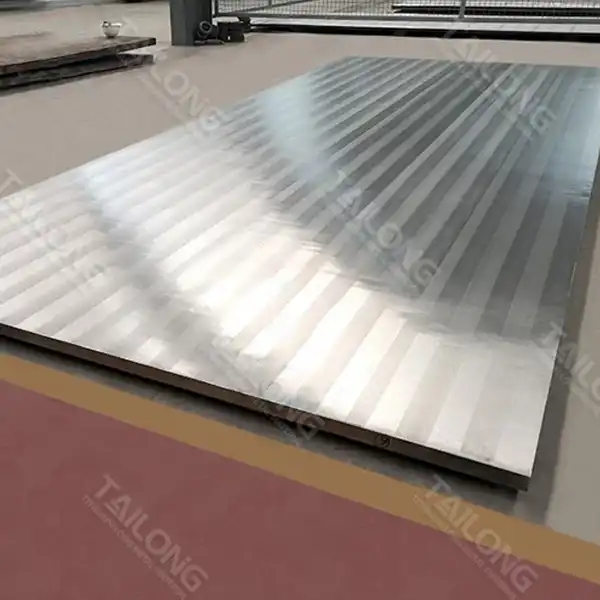
How does Grade 5 Titanium Alloy Bar compare to other materials used in aerospace manufacturing?
Comparison with Aluminum Alloys
When comparing Grade 5 Titanium Alloy Bar ASTM Standard to aluminum alloys, which are also widely used in aerospace, several key differences emerge. While aluminum alloys are lighter, Grade 5 Titanium offers significantly higher strength, better corrosion resistance, and superior performance at elevated temperatures. This makes Grade 5 Titanium Alloy Bar preferable for high-stress components and parts exposed to harsh environments or high temperatures. The higher strength-to-weight ratio of titanium allows for thinner, lighter components that can bear greater loads compared to aluminum. However, aluminum remains competitive in applications where extreme light weight is the primary concern and the mechanical demands are less severe. The choice between Grade 5 Titanium and aluminum often involves a careful balance of performance requirements, weight considerations, and cost factors.
Advantages over Steel Alloys
Grade 5 Titanium Alloy Bar ASTM Standard offers several advantages over steel alloys in aerospace applications. While high-strength steels can match or exceed the strength of Grade 5 Titanium, they do so at a significant weight penalty. The density of titanium is about 60% that of steel, allowing for substantial weight savings in structural components. This weight reduction is crucial in aerospace, where every kilogram saved can translate to improved fuel efficiency and payload capacity. Additionally, Grade 5 Titanium Alloy Bar offers superior corrosion resistance compared to most steels, eliminating the need for protective coatings in many applications. The fatigue resistance of Grade 5 Titanium is also generally superior to that of steel, making it ideal for components subjected to cyclic loading, such as landing gear and engine mounts.
Comparison with Composite Materials
The aerospace industry has seen an increased use of composite materials, particularly carbon fiber reinforced polymers (CFRP). When comparing Grade 5 Titanium Alloy Bar ASTM Standard to these composites, each material has its strengths. Composites can offer even greater weight savings and can be tailored for specific directional strength properties. However, Grade 5 Titanium Alloy Bar maintains advantages in terms of temperature resistance, impact resistance, and ease of repair. Titanium also performs better in applications requiring high stiffness and where point loading is a concern. In many modern aircraft, a hybrid approach is taken, using composites for large structural components like wings and fuselage sections, while employing Grade 5 Titanium Alloy for critical load-bearing components, engine parts, and areas requiring high temperature resistance or superior damage tolerance.
What are the future prospects of Grade 5 Titanium Alloy Bar in advancing aerospace technology?
Advancements in Manufacturing Techniques
The future of Grade 5 Titanium Alloy Bar ASTM Standard in aerospace is closely tied to advancements in manufacturing techniques. Emerging technologies like additive manufacturing (3D printing) are opening new possibilities for creating complex titanium components with optimized geometries and reduced material waste. This allows for the design of parts that were previously impossible or impractical to manufacture, potentially leading to even greater weight savings and performance improvements. Additionally, progress in precision machining and forming techniques is making it easier and more cost-effective to work with Grade 5 Titanium Alloy Bar, potentially expanding its use in a wider range of aerospace applications. These manufacturing advancements are likely to drive down production costs and increase the adoption of Grade 5 Titanium Alloy in future aircraft designs.
Integration with Smart Materials
Another exciting prospect for Grade 5 Titanium Alloy Bar ASTM Standard in aerospace is its potential integration with smart materials and sensors. As aircraft become more intelligent and connected, there's growing interest in embedding sensors and actuators directly into structural components. The favorable properties of Grade 5 Titanium Alloy, such as its biocompatibility and non-magnetic nature, make it an excellent candidate for such applications. Future developments may see titanium structures that can self-monitor for stress, fatigue, or damage, enhancing safety and enabling predictive maintenance. The combination of Grade 5 Titanium's mechanical properties with smart material capabilities could lead to adaptive structures that can respond to changing flight conditions, further optimizing performance and efficiency.
Sustainable Aviation and Titanium Recycling
As the aerospace industry increasingly focuses on sustainability, the recyclability of Grade 5 Titanium Alloy Bar ASTM Standard becomes a significant advantage. Unlike composites, which can be challenging to recycle, titanium can be recycled multiple times without loss of properties. This aligns well with the industry's push towards circular economy principles and reduced environmental impact. Future developments may see improved titanium recycling processes and increased use of recycled titanium in aerospace applications, further enhancing the material's sustainability credentials. Additionally, as the industry explores alternative propulsion technologies like electric and hydrogen-powered aircraft, Grade 5 Titanium Alloy Bar is likely to play a crucial role in developing lightweight, corrosion-resistant components for these new systems, contributing to the advancement of sustainable aviation technologies.
Conclusion
Grade 5 Titanium Alloy Bar ASTM Standard has proven to be an exceptional material in aerospace applications, offering a unique combination of high strength, low weight, and excellent corrosion resistance. Its performance in critical aerospace components has been instrumental in advancing aircraft design and efficiency. As manufacturing techniques evolve and new technologies emerge, the role of Grade 5 Titanium Alloy in aerospace is set to expand further. With its potential for integration with smart materials and its recyclability aligning with sustainability goals, this alloy is well-positioned to continue playing a crucial role in shaping the future of aerospace technology.
Shaanxi Tilong Metal Material Co., Ltd., located in Shaanxi, China, is a leading manufacturer of high-quality non-ferrous metal alloys, including Grade 5 Titanium Alloy Bar. With a complete production chain encompassing melting, forging, rolling, grinding, and annealing, Tilong provides precision metal processing solutions for various industries. The company's commitment to innovation, quality control, and customer service has established it as a trusted supplier in the aerospace, automotive, and energy sectors. Tilong's expertise in titanium alloys makes it an ideal partner for businesses seeking high-performance materials for demanding applications. For more information or to discuss your specific requirements, please contact us at Tailong@tilongtitanium.com.
FAQ
Q: What makes Grade 5 Titanium Alloy Bar suitable for aerospace use?
A: Its exceptional strength-to-weight ratio, superior corrosion resistance, and ability to perform at high temperatures make Grade 5 Titanium Alloy Bar ideal for critical aerospace applications.
Q: How does Grade 5 Titanium Alloy Bar compare to aluminum alloys?
A: While aluminum alloys are lighter, Grade 5 Titanium provides higher strength, better corrosion resistance, and superior high-temperature performance, making it preferable for high-stress aerospace components.
Q: Why is Grade 5 Titanium Alloy Bar preferred over steel in aerospace?
A: Titanium offers similar strength to steel but at about 60% of the weight, along with better fatigue and corrosion resistance, enabling lighter and longer-lasting aerospace structures.
Q: What are the future prospects of Grade 5 Titanium Alloy Bar in aviation?
A: Advancements in additive manufacturing, integration with smart materials, and sustainable recycling processes are expected to expand its role in next-generation aerospace technologies.
References
1. Boyer, R. R. (1996). An overview on the use of titanium in the aerospace industry. Materials Science and Engineering: A, 213(1-2), 103-114.
2. Peters, M., Kumpfert, J., Ward, C. H., & Leyens, C. (2003). Titanium alloys for aerospace applications. Advanced Engineering Materials, 5(6), 419-427.
3. Inagaki, I., Takechi, T., Shirai, Y., & Ariyasu, N. (2014). Application and features of titanium for the aerospace industry. Nippon Steel & Sumitomo Metal Technical Report, 106, 22-27.
4. Leyens, C., & Peters, M. (Eds.). (2003). Titanium and titanium alloys: fundamentals and applications. John Wiley & Sons.
5. Lütjering, G., & Williams, J. C. (2007). Titanium (2nd ed.). Springer-Verlag Berlin Heidelberg.
6. Donachie, M. J. (2000). Titanium: a technical guide. ASM international.