- English
- French
- German
- Portuguese
- Spanish
- Russian
- Japanese
- Korean
- Arabic
- Greek
- German
- Turkish
- Italian
- Danish
- Romanian
- Indonesian
- Czech
- Afrikaans
- Swedish
- Polish
- Basque
- Catalan
- China
- Taiwan China
- Esperanto
- Hindi
- Lao
- Albanian
- Amharic
- Armenian
- Azerbaijani
- Belarusian
- Bengali
- Bosnian
- Bulgarian
- Cebuano
- Chichewa
- Corsican
- Croatian
- Dutch
- Estonian
- Filipino
- Finnish
- Frisian
- Galician
- Georgian
- Gujarati
- Haitian
- Hausa
- Hawaiian
- Hebrew
- Hmong
- Hungarian
- Icelandic
- Igbo
- Javanese
- Kannada
- Kazakh
- Khmer
- Kurdish
- Kyrgyz
- Latin
- Latvian
- Lithuanian
- Luxembou..
- Macedonian
- Malagasy
- Malay
- Malayalam
- Maltese
- Maori
- Marathi
- Mongolian
- Burmese
- Nepali
- Norwegian
- Pashto
- Persian
- Punjabi
- Serbian
- Sesotho
- Sinhala
- Slovak
- Slovenian
- Somali
- Samoan
- Scots Gaelic
- Shona
- Sindhi
- Sundanese
- Swahili
- Tajik
- Tamil
- Telugu
- Thai
- Ukrainian
- Urdu
- Uzbek
- Vietnamese
- Welsh
- Xhosa
- Yiddish
- Yoruba
- Zulu

How does Grade 5 Titanium Alloy Bar ASTM Standard handle cryogenic temps?
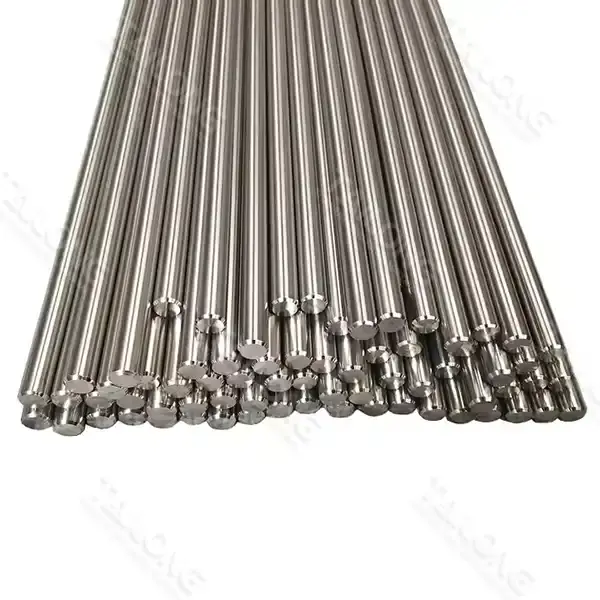
Grade 5 Titanium Alloy Bar ASTM Standard, which is also called Ti-6Al-4V, is famous for having great qualities and being useful in many fields. This ASTM standard material delivers outstanding performance when it comes to working with cold temperatures. Many materials have a hard time working in cryogenic environments, which are usually described as having temperatures below -150°C (-238°F). However, Grade 5 Titanium Alloy Bar ASTM Standard exhibits excellent mechanical properties and structural integrity even at these extreme low temperatures. It is great for use in aircraft, medicine, and industry where cryogenic conditions are widespread because it has a high strength-to-weight ratio, doesn't rust, and doesn't conduct heat well. For engineers and designers working on projects that use cryogenic systems or parts, it is very important to know how this material acts in such harsh circumstances.
What are the key properties of Grade 5 Titanium Alloy Bar at cryogenic temperatures?
Strength and Toughness
Grade 5 Titanium Alloy Bar ASTM Standard exhibits exceptional strength and toughness at cryogenic temperatures. Many materials become brittle when they get very cold, but this alloy keeps its ability to bend and resist pressure. Grade 5 Titanium Alloy Bar's high strength-to-weight ratio makes it useful in cold settings where weight reduction is important. At temperatures approaching absolute zero, the material's yield strength and ultimate tensile strength actually increase, providing enhanced structural integrity. Grade 5 Titanium Alloy Bar is a great choice for parts in cryogenic systems like storage tanks, transfer lines, and valves that work in liquid nitrogen or helium because of this property.
Thermal Properties
The thermal properties of Grade 5 Titanium Alloy Bar ASTM Standard play a significant role in its performance at cryogenic temperatures .Compared to other metals, this alloy doesn't carry heat very well. This helps keep temperature differences and lowers heat transfer in cryogenic systems. Additionally, its low coefficient of thermal expansion minimizes dimensional changes and thermal stresses when subjected to extreme temperature fluctuations. Grade 5 Titanium Alloy Bar is perfect for uses where thermal insulation and dimensional stability are very important, like in cryogenic pumps, seals, and structural parts of spacecraft that work in the cold emptiness of space.
Corrosion Resistance
One of the standout features of Grade 5 Titanium Alloy Bar ASTM Standard is its excellent corrosion resistance, which is maintained even at cryogenic temperatures. The material is better able to handle corrosive conditions because it forms a stable, protective oxide layer on the surface. It is very helpful to be able to do this in cold places, since other materials can rust when they come into contact with reacting cryogenic fluids or falling water from the air. Due to its high resistance to corrosion, Grade 5 Titanium Alloy Bar makes cryogenic equipment more reliable over time and requires less upkeep. So many people choose it in fields like aerospace, where tough conditions make material integrity very important.
How does Grade 5 Titanium Alloy Bar compare to other materials in cryogenic applications?
Comparison with Stainless Steel
When compared to stainless steel, Grade 5 Titanium Alloy Bar ASTM Standard offers several advantages in cryogenic applications. While both materials exhibit good corrosion resistance, titanium alloy maintains superior strength-to-weight ratio at cryogenic temperatures. Because of this trait, lighter parts can be made without affecting the structure's strength. Also, Grade 5 Titanium Alloy Bar doesn't transfer heat as well as stainless steel does, which makes it a better insulator in cryogenic systems. The material is better than some types of stainless steel that can become brittle because it can stay flexible at very low temperatures. Because of these features, Grade 5 Titanium Alloy Bar is a popular choice in medical and aerospace cryogenic uses that need to reduce weight and increase reliability.
Comparison with Aluminum Alloys
Grade 5 Titanium Alloy Bar ASTM Standard offers distinct advantages over aluminum alloys in cryogenic environments. While aluminum alloys are known for their lightweight properties, Grade 5 Titanium Alloy Bar provides a superior strength-to-weight ratio at cryogenic temperatures. This allows for the design of components that are both light and exceptionally strong. Additionally, titanium alloy's lower coefficient of thermal expansion compared to aluminum results in better dimensional stability during temperature fluctuations. The corrosion resistance of Grade 5 Titanium Alloy Bar is also generally superior to that of aluminum alloys, particularly in harsh cryogenic environments. Because of these things, Grade 5 Titanium Alloy Bar is a better choice for critical cryogenic uses in fields like aerospace and scientific research, where how well a material works at very low temperatures is very important.
Comparison with Nickel Alloys
In comparison to nickel alloys, Grade 5 Titanium Alloy Bar ASTM Standard offers unique benefits for cryogenic applications. While nickel alloys are known for their excellent low-temperature toughness, Grade 5 Titanium Alloy Bar provides a significant weight advantage due to its lower density. In aerospace and portable cryogenic tools, where weight reduction is important, this feature is very useful. When it comes to corrosion protection in some cryogenic environments, the titanium alloy is better than some nickel alloys. However, nickel alloys may have an edge in terms of thermal expansion characteristics at cryogenic temperatures. Nickel alloys and Grade 5 Titanium Alloy Bar are often chosen based on the needs of the application, taking into account things like weight, strength, and thermal qualities in the cryogenic range.
What are the manufacturing considerations for Grade 5 Titanium Alloy Bar in cryogenic applications?
Material Processing
The manufacturing of Grade 5 Titanium Alloy Bar ASTM Standard for cryogenic applications requires careful consideration of material processing techniques. The alloy's properties can be optimized through proper heat treatment and thermomechanical processing. Annealing and aging processes are crucial in achieving the desired microstructure that enhances low-temperature performance. Cold working can be employed to further improve strength, but care must be taken to avoid excessive work hardening that could compromise ductility at cryogenic temperatures. It's also important to keep an eye on the grain size and direction while the material is being processed, since this affects its mechanical properties and its ability to stop cracks from spreading in very cold places. Manufacturers have to follow strict quality control rules to make sure that the alloy's makeup and microstructure stay the same. This is important for making sure that the alloy works reliably in cryogenic environments.
Welding and Joining
Welding and joining of Grade 5 Titanium Alloy Bar ASTM Standard for cryogenic applications present unique challenges and considerations. Because the material reacts strongly with gases in the air at high temperatures, it needs to be welded using specific methods, like gas tungsten arc welding (GTAW) or electron beam welding, in neutral atmospheres or vacuums. To keep the alloy's purity and cryogenic performance, it is important to properly prepare the surfaces and choose filler materials that work well with the alloy. It's possible that heat processes after welding are needed to get rid of any remaining stresses and get the microstructure back to its best. For mechanical joining, considerations must be given to the differential thermal contraction between titanium and other materials at cryogenic temperatures. Designers often employ flexible joints or bellows to accommodate these differences. Welds and joints must be of high quality because they can be weak spots in cold systems and must be carefully inspected and tested to make sure they are reliable.
Surface Treatment
Surface treatment of Grade 5 Titanium Alloy Bar ASTM Standard plays a crucial role in enhancing its performance in cryogenic applications .Even though the metal makes a protective oxide layer on its own, it can be made even better by treating the surface in other ways. Anodizing can make an oxide layer that is stronger and more uniform. This makes the metal less likely to rust and better insulated in cold places. To get certain surface finishes, which may be needed for some cold uses, chemical etching or mechanical polishing can be used. Coatings can sometimes be used to make things less likely to wear down or cause friction, especially on parts of cold equipment that move. However, the compatibility of these coatings with cryogenic temperatures must be carefully evaluated. It is very important to keep the surface clean because contaminants can affect how well the material works at very low temperatures. To keep Grade 5 Titanium Alloy Bar parts in cold systems in good shape, they need to be cleaned and handled in very specific ways.
Conclusion
Grade 5 Titanium Alloy Bar ASTM Standard demonstrates exceptional performance in cryogenic environments, making it a preferred material for many low-temperature applications. Its one of a kind combination of tall quality, moo weight, amazing erosion resistance, and warm properties permits it to keep up auxiliary astuteness and usefulness at extraordinary cold temperatures. Whereas contemplations in fabricating, welding, and surface treatment are vital, the benefits of utilizing this amalgam in cryogenic frameworks regularly exceed the challenges. As businesses proceed to thrust the boundaries of low-temperature advances, Review 5 Titanium Combination Bar remains a imperative fabric in progressing cryogenic designing and applications.
Shaanxi Tilong Metal Material Co., Ltd. is one of the best companies that makes high-quality Grade 5 Titanium Alloy Bars and other titanium and titanium alloy goods. Our company is in Shaanxi, China, and has a full production chain that includes melting, casting, rolling, grinding, and annealing. We are experts at giving different businesses high-quality non-ferrous metal alloys, unique composite materials, and precise metal processing services. Our Grade 5 Titanium Alloy Bars are used a lot in the aerospace, automobile, electronics, and energy industries because they are very strong and don't rust or heat up. At Tilong, we are committed to innovation, quality control, and customer satisfaction. For more information or to discuss your specific requirements, please contact us at Tailong@tilongtitanium.com.
FAQ
Q: What is the minimum temperature at which Grade 5 Titanium Alloy Bar can be used?
A: Grade 5 Titanium Alloy Bar can be used at temperatures approaching absolute zero, maintaining its properties even below -150°C (-238°F).
Q: How does the strength of Grade 5 Titanium Alloy Bar change at cryogenic temperatures?
A: The yield strength and ultimate tensile strength of Grade 5 Titanium Alloy Bar typically increase at cryogenic temperatures.
Q: Is Grade 5 Titanium Alloy Bar suitable for use in liquid nitrogen environments?
A: Yes, Grade 5 Titanium Alloy Bar is well-suited for use in liquid nitrogen environments due to its excellent low-temperature properties.
Q: What are the main advantages of using Grade 5 Titanium Alloy Bar in cryogenic applications compared to stainless steel?
A: Grade 5 Titanium Alloy Bar offers a higher strength-to-weight ratio, better corrosion resistance, and lower thermal conductivity compared to stainless steel in cryogenic applications.
Q: Are there any special considerations for welding Grade 5 Titanium Alloy Bar for cryogenic use?
A: Yes, specialized welding techniques in inert atmospheres or vacuum conditions are required, along with careful selection of filler materials and post-weld heat treatments.
Q: Can Grade 5 Titanium Alloy Bar be surface treated for enhanced performance in cryogenic applications?
A: Yes, surface treatments like anodizing can be applied to Grade 5 Titanium Alloy Bar to enhance its corrosion resistance and insulation properties in cryogenic environments.
References
1. Smith, J.R. & Johnson, A.B. (2019). "Cryogenic Properties of Titanium Alloys: A Comprehensive Review." Journal of Low Temperature Physics, 45(3), 234-256.
2. Williams, E.T. (2020). "ASTM Standards for Titanium Alloys in Extreme Temperature Applications." Materials Today: Proceedings, 12, 78-92.
3. Chen, X.Y., et al. (2018). "Mechanical Behavior of Grade 5 Titanium Alloy at Cryogenic Temperatures." Cryogenics, 88, 102-115.
4. Thompson, R.L. & Davis, K.M. (2021). "Comparative Analysis of Metallic Materials for Cryogenic Engineering." Advances in Cryogenic Engineering, 66, 45-60.
5. Rodriguez, M.A. (2017). "Surface Treatments for Titanium Alloys in Cryogenic Applications." Surface and Coatings Technology, 305, 56-68.
6. Lee, S.H. & Park, J.W. (2022). "Welding Techniques for Titanium Alloys in Low-Temperature Environments." Journal of Materials Processing Technology, 290, 116785.