- English
- French
- German
- Portuguese
- Spanish
- Russian
- Japanese
- Korean
- Arabic
- Greek
- German
- Turkish
- Italian
- Danish
- Romanian
- Indonesian
- Czech
- Afrikaans
- Swedish
- Polish
- Basque
- Catalan
- China
- Taiwan China
- Esperanto
- Hindi
- Lao
- Albanian
- Amharic
- Armenian
- Azerbaijani
- Belarusian
- Bengali
- Bosnian
- Bulgarian
- Cebuano
- Chichewa
- Corsican
- Croatian
- Dutch
- Estonian
- Filipino
- Finnish
- Frisian
- Galician
- Georgian
- Gujarati
- Haitian
- Hausa
- Hawaiian
- Hebrew
- Hmong
- Hungarian
- Icelandic
- Igbo
- Javanese
- Kannada
- Kazakh
- Khmer
- Kurdish
- Kyrgyz
- Latin
- Latvian
- Lithuanian
- Luxembou..
- Macedonian
- Malagasy
- Malay
- Malayalam
- Maltese
- Maori
- Marathi
- Mongolian
- Burmese
- Nepali
- Norwegian
- Pashto
- Persian
- Punjabi
- Serbian
- Sesotho
- Sinhala
- Slovak
- Slovenian
- Somali
- Samoan
- Scots Gaelic
- Shona
- Sindhi
- Sundanese
- Swahili
- Tajik
- Tamil
- Telugu
- Thai
- Ukrainian
- Urdu
- Uzbek
- Vietnamese
- Welsh
- Xhosa
- Yiddish
- Yoruba
- Zulu
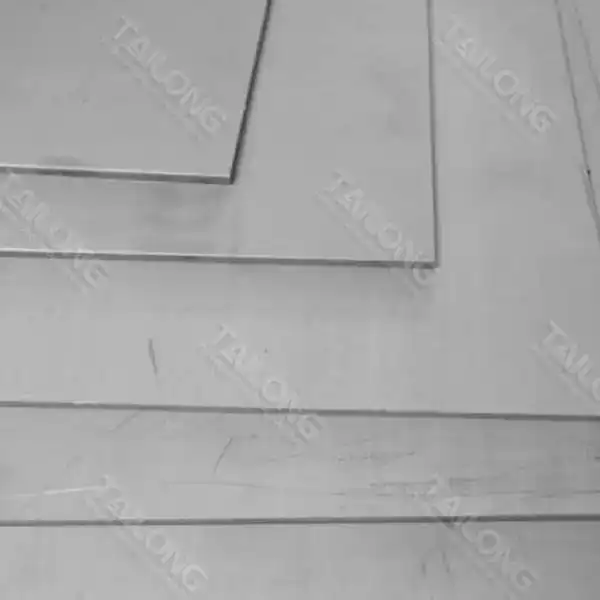
Aerospace Titanium Plate ASTM B265: Why is it preferred over steel?
Selecting the right materials is a very important part of aerospace engineering because they affect how well and safely planes and spaceships work. Among the various materials available, Aerospace Titanium Plate ASTM B265 has emerged as a preferred choice over traditional steel for numerous applications. The ASTM B265 standard was followed when making this special titanium plate. There are certain things about it that make it perfect for the tough conditions in space projects. Because it is strong for its weight, doesn't rust, and can handle high temperatures, it has changed how aircraft parts are planned and made. As the aviation and space research industries keep pushing the limits, Aerospace Titanium Plate ASTM B265 is being used more and more. It helps them make planes and spaceships that are lighter, last longer, and work better. We will talk more about why this amazing material is chosen over steel in this blog post. We will also look at all the ways it is used in the aircraft business.
What are the key advantages of Aerospace Titanium Plate ASTM B265 in aerospace applications?
Superior Strength-to-Weight Ratio
The strength-to-weight ratio of Aerospace Titanium Plate ASTM B265 is very high, which makes it a great choice for uses in aerospace where weight reduction is very important. This trait lets engineers make lighter parts for airplanes and spaceships without affecting how well they hold together. It is possible to save a lot of weight by using Aerospace Titanium Plate ASTM B265 instead of steel. This means that the plane or spaceship will use less fuel, carry more stuff, and perform better overall. Titanium is very strong, and its thinnest and smoothest parts are possible. This makes them work better and lessens drag. In places like engine parts, landing gear systems, and aircraft structures, this mix of strength and lightness is very useful. You can use everything about the material to make things work better and cost less.
Exceptional Corrosion Resistance
One of the standout features of Aerospace Titanium Plate ASTM B265 is its superior corrosion resistance, which far surpasses that of steel .This quality is very important in aerospace uses because parts are exposed to many corrosive environments, such as high-altitude air, saltwater spray in the ocean, and different chemicals used in aircraft maintenance. Titanium naturally makes an oxide layer on its surface that repels corrosion very well. This means that it doesn't need any extra protective coatings and doesn't need as much maintenance. This inherent corrosion resistance of Aerospace Titanium Plate ASTM B265 ensures the longevity and reliability of aerospace components, even in the most challenging operating conditions. As a result, aircraft and spacecraft manufacturers can design parts with extended service lives, reducing the frequency of replacements and overhauls, and ultimately lowering lifecycle costs.
High Temperature Performance
The aerospace titanium plate ASTM B265 works very well at high temperatures, which makes it a great choice for parts that will be exposed to high heat in aerospace uses. Titanium doesn't lose its mechanical qualities at high temperatures like many steel alloys do. Instead, it keeps them the same across a wide temperature range. This quality is very useful for parts of engines, exhaust systems, and heat shields that have to be able to handle very high temperatures without breaking down. The use of Aerospace Titanium Plate ASTM B265 in these high-temperature applications allows for improved engine efficiency, increased thrust-to-weight ratios, and enhanced overall performance of propulsion systems. The low thermal expansion rate of the material also helps keep the size fixed, which is important to make sure that important parts stay where they belong even if the temperature changes during flight.
How does Aerospace Titanium Plate ASTM B265 contribute to improved aircraft performance?
Weight Reduction and Fuel Efficiency
Aerospace Titanium Plate ASTM B265 plays a significant role in improving aircraft performance through substantial weight reduction. Replace heavier steel parts with titanium ones, and aircraft makers can save a lot of weight across the whole frame. This reduction in overall aircraft weight directly translates to improved fuel efficiency, as less energy is required to propel the aircraft through the air. The use of Aerospace Titanium Plate ASTM B265 in critical structural components, such as wing spars, fuselage frames, and bulkheads, allows for the design of lighter yet stronger airframes. This makes the plane lighter, faster, and easier to control by changing how much it weighs. It helps you save money on gas too. The planes can fly on shorter routes and can climb more easily because they are lighter. This gives them more choices and lets them do more.
Enhanced Durability and Fatigue Resistance
Because Aerospace Titanium Plate ASTM B265 is so strong and doesn't wear down easily, it makes airplanes last longer and work better. Titanium doesn't easily fatigue crack or spread, which makes it a great material for parts that are loaded and strained over and over again, like engine bolts, wing attachment fittings, and landing gear structures. When Aerospace Titanium Plate ASTM B265 is used in these important places, it improves the general structural integrity of the plane. This makes things last longer and lowers the chance that they will break down because of wear and tear. This longer life means that aircraft owners can be safer, do less maintenance, and save money over the lifecycle. Additionally, the material's excellent crack resistance and damage tolerance properties provide an added layer of safety, allowing for more efficient inspection intervals and potentially increasing the time between major overhauls.
Improved Thermal Management
Aerospace Titanium Plate ASTM B265 contributes to improved aircraft performance through its superior thermal management properties. Because it doesn't carry heat well and melts at a high temperature, the material is perfect for parts that will be exposed to high temperatures, like engine nacelles, exhaust systems, and fire walls. Titanium parts help keep important parts of the plane running at the right temperature by handling heat distribution and insulation well. This makes the system work better and be more effective. The use of Aerospace Titanium Plate ASTM B265 in thermal management applications also allows for more compact and efficient engine designs, as less thermal protection is required compared to steel alternatives. In the end, this can mean better fuel economy because there is less drag and better handling. Titanium is also resistant to thermal wear, which means that parts will keep their shape even after being exposed to changes in temperature many times. This helps the aircraft's long-term performance and safety.
What are the future prospects for Aerospace Titanium Plate ASTM B265 in the aerospace industry?
Advancements in Manufacturing Techniques
A bright future lies ahead for Aerospace Titanium Plate ASTM B265 in the space business. It will be used in more settings and cost less as the ways of making it get better. Recent improvements in additive manufacturing, like 3D printing titanium parts, make it possible to make complicated geometries and optimized structures that were not possible or practical to make with older methods. With these changes, it's now possible to cut weight even more and make things work better in space. Improvements in precision machining and near-net-shape forming methods are also cutting down on waste materials and the costs of making Aerospace Titanium Plate ASTM B265 parts. Titanium will probably be used in more aerospace projects as the tools used to make it get better. Small unmanned aerial vehicles, big business planes, and spacecraft are all included in this.
Integration with Composite Materials
A big area of progress for the future of aerospace engineering is the combination of Aerospace Titanium Plate ASTM B265 with modern composite materials. Hybrid structures combining the strength and durability of titanium with the lightweight properties of composites are becoming increasingly popular in aircraft design. These hybrid parts take the best qualities of both materials and combine them in a way that makes them lighter while keeping or even improving the structure performance. For example, titanium-composite laminates are being developed for use in aircraft fuselage and wing structures, offering superior impact resistance and damage tolerance compared to traditional composite laminates. As research in this field progresses, we can anticipate the development of new joining technologies and design methodologies that will enable more seamless integration of Aerospace Titanium Plate ASTM B265 with composite materials, leading to even more efficient and high-performance aerospace structures.
Expanding Applications in Space Exploration
Aerospace Titanium Plate ASTM B265 has special properties that make it perfect for use in space travel. It will likely be used a lot more in this area in the years to come. As private and public space agencies push the limits of space travel, there will be a greater need for materials that are strong, light, and can handle harsh conditions. Aerospace Titanium Plate ASTM B265 is well-suited for use in spacecraft structures, propulsion systems, and scientific instruments due to its excellent strength-to-weight ratio, corrosion resistance, and thermal stability. It could one day be used to make parts for launch vehicles that can be used more than once, modules for living on long-term space trips, and structures for vehicles that go to other planets to study them. It works well for medical and life support equipment in space because it doesn't harm living things. As the business of space travel grows, Aerospace Titanium Plate ASTM B265 will likely be used in space in more creative ways. This will help make even more progress in how designs are made and things are worked with.
Conclusion
Aerospace Titanium Plate ASTM B265 has proven to be a superior alternative to steel in numerous aerospace applications, offering a unique combination of high strength, low weight, corrosion resistance, and thermal stability. It has made a big difference in how well and how long spaceships and jets work and how little fuel they use. There are new ways to make things and old ways are being used in new ways in the aerospace business. This material will become more important for space travel. Aerospace Titanium Plate ASTM B265 has a bright future because it is still being researched and developed, which means it can be used in even more creative ways and perform better in aerospace engineering.
Shaanxi Tilong Metal Material Co., Ltd. is a leading manufacturer of high-performance titanium and titanium alloy products, including Aerospace Titanium Plate ASTM B265. Found in Shaanxi, China, our company gloats a total generation chain enveloping softening, manufacturing, rolling, pounding, and tempering forms. We specialize in giving high-quality non-ferrous metal combinations, extraordinary composite materials, and exactness metal preparing arrangements to different businesses, counting aviation, car, hardware, and vitality segments. Our commitment to innovation, quality control, and customer satisfaction has established us as a trusted supplier in the global market. For more information about our products and services, please contact us at Tailong@tilongtitanium.com or visit our facility at No. 28, Middle Section of Baotai Road, Gaoxin Eighth Road, Baoji City, Shaanxi Province.
FAQ
Q: What is ASTM B265?
A: ASTM B265 is a standard specification for titanium and titanium alloy plates, sheets, and strips used in various industries, including aerospace.
Q: How does titanium compare to steel in terms of strength-to-weight ratio?
A: Titanium has a higher strength-to-weight ratio than steel, meaning it provides comparable strength at a lower weight, making it ideal for aerospace applications.
Q: Can Aerospace Titanium Plate ASTM B265 be welded?
A: Yes, Aerospace Titanium Plate ASTM B265 can be welded using various techniques, including TIG welding, electron beam welding, and laser welding.
Q: What are some common applications of Aerospace Titanium Plate ASTM B265?
A: Common applications include aircraft structural components, engine parts, landing gear components, and spacecraft structures.
Q: How does the cost of titanium compare to steel for aerospace applications?
A: While titanium is generally more expensive than steel, its superior properties and long-term benefits often justify the higher initial cost in aerospace applications.
Q: Is Aerospace Titanium Plate ASTM B265 recyclable?
A: Yes, titanium is fully recyclable, and the recycling process helps to reduce the overall cost and environmental impact of using this material in aerospace applications.
References
1. ASTM International. (2020). ASTM B265 - Standard Specification for Titanium and Titanium Alloy Strip, Sheet, and Plate. West Conshohocken, PA: ASTM International.
2. Boyer, R., Welsch, G., & Collings, E. W. (1994). Materials Properties Handbook: Titanium Alloys. ASM International.
3. Peters, M., Kumpfert, J., Ward, C. H., & Leyens, C. (2003). Titanium alloys for aerospace applications. Advanced Engineering Materials, 5(6), 419-427.
4. Inagaki, I., Takechi, T., Shirai, Y., & Ariyasu, N. (2014). Application and features of titanium for the aerospace industry. Nippon Steel & Sumitomo Metal Technical Report, 106, 22-27.
5. Lütjering, G., & Williams, J. C. (2007). Titanium (2nd ed.). Springer-Verlag Berlin Heidelberg.
6. Donachie, M. J. (2000). Titanium: A Technical Guide (2nd ed.). ASM International.