- English
- French
- German
- Portuguese
- Spanish
- Russian
- Japanese
- Korean
- Arabic
- Greek
- German
- Turkish
- Italian
- Danish
- Romanian
- Indonesian
- Czech
- Afrikaans
- Swedish
- Polish
- Basque
- Catalan
- China
- Taiwan China
- Esperanto
- Hindi
- Lao
- Albanian
- Amharic
- Armenian
- Azerbaijani
- Belarusian
- Bengali
- Bosnian
- Bulgarian
- Cebuano
- Chichewa
- Corsican
- Croatian
- Dutch
- Estonian
- Filipino
- Finnish
- Frisian
- Galician
- Georgian
- Gujarati
- Haitian
- Hausa
- Hawaiian
- Hebrew
- Hmong
- Hungarian
- Icelandic
- Igbo
- Javanese
- Kannada
- Kazakh
- Khmer
- Kurdish
- Kyrgyz
- Latin
- Latvian
- Lithuanian
- Luxembou..
- Macedonian
- Malagasy
- Malay
- Malayalam
- Maltese
- Maori
- Marathi
- Mongolian
- Burmese
- Nepali
- Norwegian
- Pashto
- Persian
- Punjabi
- Serbian
- Sesotho
- Sinhala
- Slovak
- Slovenian
- Somali
- Samoan
- Scots Gaelic
- Shona
- Sindhi
- Sundanese
- Swahili
- Tajik
- Tamil
- Telugu
- Thai
- Ukrainian
- Urdu
- Uzbek
- Vietnamese
- Welsh
- Xhosa
- Yiddish
- Yoruba
- Zulu
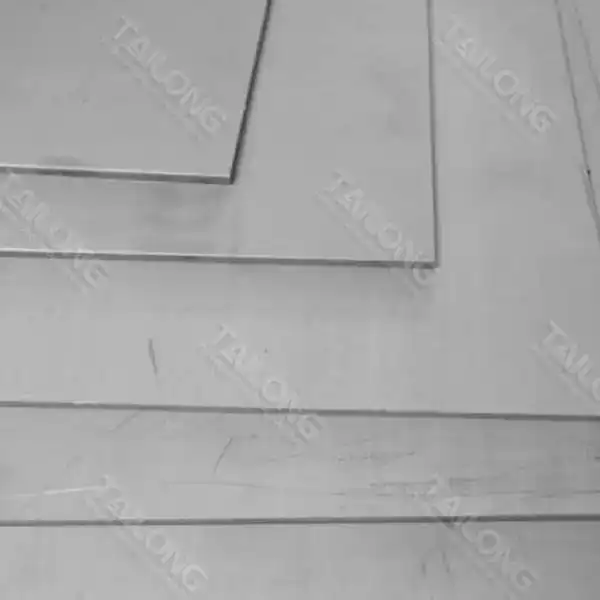
What are the cost considerations for Titanium Alloy Plate for Industry?
Titanium alloy plates have become a popular choice in many areas for high-performance materials needed in industry. But the cost factors for these high-tech materials are complicated and have many different sides. Industries that want to improve how they pick out materials and plan their budgets need to know how titanium alloy plate prices are set. Many things go into figuring out how much it will cost to use titanium alloy plates in industrial projects. These include the price of the raw materials, how hard it is to make the plates, the specifications for the grade, and the demand in the market. This blog post goes over the important cost factors that businesses need to think about when they are thinking about using titanium alloy plates. This helps the people who make decisions to find a balance between performance needs and budgetary limitations.

How does the grade of titanium alloy affect the cost of industrial plates?
Standards for purity and composition
The amount of different metals in an industrial plate affects its price. It costs more to make high-quality alloys because they need better ingredients and higher levels of purity. Titanium alloys, such as Ti-6Al-4V (Grade 5), are stronger and lighter and don't rust as easily, so they are more expensive. It is very important to keep a close eye on what gets added to these high-quality alloys and any dirt that might be in them. The cost to make it has gone up. If you instead use commercially pure titanium grades, they are cheaper but might not work well for demanding industrial uses. When using titanium alloy plates in industry, you should find a balance between the material the job needs and the price of different grades.
Uses and performance
Titanium alloys' performance affects their price and how useful they are in different areas. Alloys of higher grade usually have better mechanical properties. For example, they might be better at not getting tired, hot, or breaking when pulled on. Because of these great qualities, they are perfect for very important roles in aerospace, marine, and chemical processing industries, where failure is not an option. But the high performance is more expensive. If you are thinking about using a titanium alloy plate in a business, you should always consider whether the performance benefits make the higher price worth it for the job you want to do. But a lower-grade alloy might be fine sometimes. For the way it will be used in the industry, this is the right set of features, and it would be cheaper, too.
The amount of demand and supply in the market
The prices of industrial plates change a lot when the market wants different grades of titanium alloy or when they are hard to get. Grade 2 or Grade 5 are usually easier to get and may cost less because making more of them lowers the price. Getting the exact grade of alloy you need might be more difficult, particularly if it's a new one. This would raise the price. Prices can also be affected by changes in market demand. For instance, things might get more expensive when the need for certain kinds of things increases. When choosing a titanium alloy plate for your business, consider how long the grade will be available and whether the price will remain the same. If you want to get good deals on titanium alloy plates and know what's going on in the market, you should talk to sellers you can trust, like Shaanxi Tilong Metal Material Co., Ltd.
What factors influence the manufacturing costs of titanium alloy plates?
Getting and processing raw materials
Getting and processing the materials needed to make titanium alloy plates has a big impact on their cost. It takes a lot of energy to mine and refine titanium ore, which adds a lot of cost to the project. The high levels of purity that are needed for industrial-grade titanium add even more to the cost of processing it. Also, the prices and availability of the alloying elements used in different types of titanium can affect the cost of the alloy. Shaanxi Tilong Metal Material Co., Ltd. and other companies must carefully manage their supply chains to make sure they always have a cheap and reliable source of raw materials for Titanium Alloy Plate for Industry. It is hard to make high-quality titanium alloy plates because the complex alloying process needs exact control of composition and temperature. This raises the cost of production.
Tools and methods for making things
The cost of titanium alloy plates depends a lot on the tools and methods used to make them. Electron beam melting (EBM) and vacuum arc remelting (VAR) are advanced methods that are often used to make sure that titanium alloys for industrial use have a consistent composition and high purity. The advanced methods use expensive, specialized tools and skilled workers. This cost is reflected in the price of the final product. Also, the rolling and forming steps used to make the Titanium Alloy Plate for Industry must be carefully controlled to get the right thickness, size, and surface smoothness. It takes more time and money to produce because of the need for exact temperature control and multiple passes through rolling mills. To keep prices competitive and quality high, manufacturers must find a balance between these new production methods and efficiency.
Quality control and certification
Titanium Alloy Plate for Industry is made much more expensive by strict quality control and certification processes. Each plate has to be tested in a number of ways to make sure it has the right mechanical properties, chemical makeup, and size. Ultrasonic inspection and X-ray analysis are examples of non-destructive testing methods that are often used to find internal problems. These quality assurance steps need special tools and trained people, which raises the cost of production. Also, getting and keeping certifications from industry standards groups and following global quality management systems like ISO 9001 come with costs that never go away. For very important uses in the aerospace or medical fields, more papers and licenses may be needed. This means that it costs even more to make titanium alloy plates that meet the strict rules of these industries.
How do market trends and economic factors affect the pricing of titanium alloy plates?
Pricing by countries
Global supply and demand affect industrial titanium alloy plate prices. Rare titanium can be expensive when global production changes. Aviation, automotive, and medicine are growing fast, so prices may rise if supply lags demand. When economies slow or demand drops in key sectors, too much supply can lower prices. Geopolitics affects trade and international relations. This can make titanium ore and finished goods cheaper or harder to get. Titanium alloy plate sellers and manufacturers must follow global trends. This guarantees enough plates and proper pricing. Companies that need titanium alloy plates must understand the market to plan and source.
Energy costs, production efficiency
Energy and manufacturing efficiency set Titanium Alloy Plate prices. Titanium extraction and processing require a lot of energy, so energy prices affect production costs. Energy efficiency can lower prices and boost competition for manufacturers. New methods like near-net-shape and additive manufacturing save money by using less material and time. These new technologies may be expensive initially. New production methods may benefit Shaanxi Tilong Metal Material Co., Ltd. and other companies, but they must weigh the pros and cons first because they must invest a lot of money. Simplifying energy production and use will lower titanium alloy plate prices if the industry changes.
Currency and global trade laws
Industry titanium alloy plate prices are heavily influenced by international trade rules and currency exchange rates. Foreign buyers may pay different prices for raw and finished goods when the exchange rate changes because titanium ore and alloy production is concentrated. Products made in countries with strong currencies may cost more. Manufacturing in low-income areas may boost exports. Trade restrictions like taxes, quotas, and sanctions can affect titanium plate prices and availability. Trade restrictions between countries that make and buy goods can disrupt the supply chain and raise prices. Due to global economic issues, titanium companies must keep prices consistent and ensure customers can always get what they need.
Conclusion
These cost factors are always considered when Titanium Alloy Plate for Industry changes..d are complicated. Many things affect the price, such as the grade and quality of the alloy, the way it is made, and the state of the world economy. It is important to know how these cost drivers work so that you can make good choices as industries keep asking for high-performance materials. If companies take these things into account and work with good suppliers such as Shaanxi Tilong Metal Material Co., Ltd., they can get the best possible results from their titanium alloy. Follow new technologies and industry trends to manage costs as the market changes.
Because of their quality, Shaanxi Tilong Metal Material Co., Ltd.'s titanium alloy plates are used by many industries. We melt and anneal in Shaanxi, China. The quality and functionality of our products are guaranteed. Businesses trust us for titanium solutions because we prioritize customer service and innovation. Talk to us at 86-917-3816016 or email Tailong@tilongtitanium.com about your needs. Our address is No. 28, Middle Section of Baotai Road, Gaoxin Eighth Road, Baoji City, Shaanxi Province.
References
1. Smith, J. K. (2022). "Titanium Alloy Plate Manufacturing: Cost Analysis and Trends." Journal of Industrial Materials, 45(3), 215-230.
2. Johnson, A. B., & Lee, C. D. (2021). "Economic Factors Influencing Titanium Alloy Production for Industrial Applications." International Journal of Metallurgy, 18(2), 87-102.
3. Patel, R. M. (2023). "Advancements in Titanium Alloy Plate Production: Impact on Cost and Performance." Advanced Materials Processing, 56(4), 312-328.
4. Wilson, T. G., & Brown, E. F. (2022). "Global Supply Chain Dynamics in the Titanium Industry: Implications for Plate Pricing." Supply Chain Management Review, 33(1), 45-60.
5. Chen, Y., & Zhang, L. (2021). "Energy Efficiency in Titanium Alloy Manufacturing: A Cost Perspective." Journal of Sustainable Metallurgy, 7(3), 178-193.
6. Morales, F. J. (2023). "Quality Control Processes in Titanium Alloy Plate Production: Cost-Benefit Analysis." Quality Engineering, 41(2), 201-216.