- English
- French
- German
- Portuguese
- Spanish
- Russian
- Japanese
- Korean
- Arabic
- Greek
- German
- Turkish
- Italian
- Danish
- Romanian
- Indonesian
- Czech
- Afrikaans
- Swedish
- Polish
- Basque
- Catalan
- China
- Taiwan China
- Esperanto
- Hindi
- Lao
- Albanian
- Amharic
- Armenian
- Azerbaijani
- Belarusian
- Bengali
- Bosnian
- Bulgarian
- Cebuano
- Chichewa
- Corsican
- Croatian
- Dutch
- Estonian
- Filipino
- Finnish
- Frisian
- Galician
- Georgian
- Gujarati
- Haitian
- Hausa
- Hawaiian
- Hebrew
- Hmong
- Hungarian
- Icelandic
- Igbo
- Javanese
- Kannada
- Kazakh
- Khmer
- Kurdish
- Kyrgyz
- Latin
- Latvian
- Lithuanian
- Luxembou..
- Macedonian
- Malagasy
- Malay
- Malayalam
- Maltese
- Maori
- Marathi
- Mongolian
- Burmese
- Nepali
- Norwegian
- Pashto
- Persian
- Punjabi
- Serbian
- Sesotho
- Sinhala
- Slovak
- Slovenian
- Somali
- Samoan
- Scots Gaelic
- Shona
- Sindhi
- Sundanese
- Swahili
- Tajik
- Tamil
- Telugu
- Thai
- Ukrainian
- Urdu
- Uzbek
- Vietnamese
- Welsh
- Xhosa
- Yiddish
- Yoruba
- Zulu
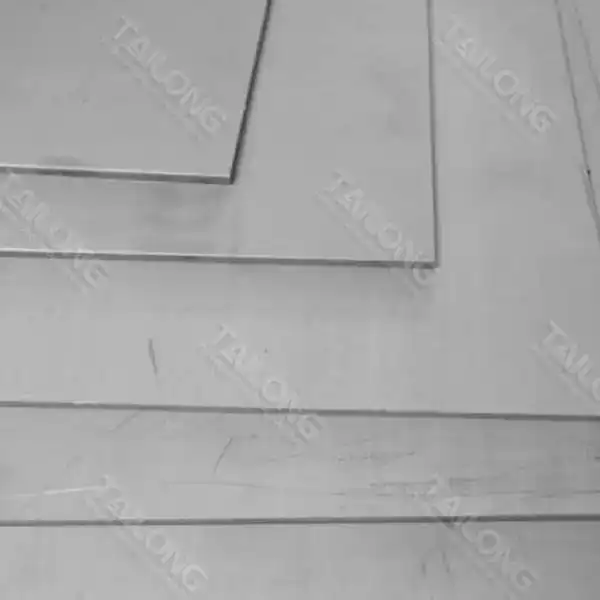
Industrial Titanium Plate for Equipment: Long-term durability factors?
Many different types of businesses are very interested in industrial titanium plates for equipment because they last a very long time and work very well. Because they are strong for their weight, don't rust, and can handle high temps, these plates are now needed in many fields, from making chemicals and energy to making planes and cars. When looking at what makes industrial titanium plates last a long time, it's important to look at their material qualities, how they're made, and how well they stand up to the elements. Titanium plates can keep their shape and usefulness for a long time, even in harsh working conditions, because they have a special mix of these elements. This blog post will go into detail about the main reasons why equipment makers choose industrial titanium plates and look at the things that make them work well for a long time in a variety of industrial settings.

What are the key factors affecting the long-term durability of Industrial Titanium Plates for Equipment?
Material Composition and Grade Selection
The long-term durability of Industrial Titanium Plates for Equipment is significantly influenced by their material composition and grade selection. Titanium alloys are categorized into various grades. Each grade is good for different things because it has its own special qualities. Grade 2 titanium, for example, is known for being very resistant to corrosion and easy to shape, which makes it perfect for chemical handling equipment. Grade 5 (Ti-6Al-4V), on the other hand, offers superior strength and is commonly used in aerospace and automotive industries. When picking titanium plates for equipment, it's important to think about the specifics of the surroundings and the job's performance needs. The plate will be able to handle rust, wear and tear, and high temperatures if you choose the right type .The plate will last longer and work better because of this.
Surface Treatment and Finishing Techniques
Surface cleaning and finishing methods are very important for making Industrial Titanium Plates for Equipment last longer. Ti plates can have their surface made better in a number of ways, such as by heat treating, anodizing, or nitriding them. The metal can get harder through these steps, which makes it less likely to rust and wears out faster. This can help the tools last longer .For instance, anodizing adds a protected oxide layer to the surface of titanium, which makes it stronger against chemical attack and wear. Nitriding, on the other hand, can significantly improve the plate's fatigue strength and wear resistance. By carefully selecting and applying appropriate surface treatments, manufacturers can optimize the performance and longevity of titanium plates in diverse industrial applications.
Environmental Resistance and Stress Factors
The long-term durability of Industrial Titanium Plates for Equipment is heavily dependent on their ability to withstand various environmental stresses and operating conditions. Titanium doesn't rust naturally, even in harsh environments with chlorides, acids, or saltwater. This makes it a great material for tools that will be in harsh chemicals or marine environments. Titanium plates also keep their mechanical qualities at high temperatures, which means they can be used in high-temperature industries like aerospace and energy production. But things like cyclic loading, temperature cycling, and being exposed to some chemicals for a long time can still affect how well the plate works over time. Understanding these environmental pressures and making sure that equipment has the right safety features can help make sure that titanium plates last a long time and work well in industrial settings.
How does the manufacturing process impact the durability of Industrial Titanium Plates for Equipment?
Melting and Alloying Techniques
Melting and alloying are two very important steps in the process of making Industrial Titanium Plates for Equipment. They have a big effect on how long the finished product lasts. To make sure the titanium metal is pure and uniform, advanced melting methods like vacuum arc remelting (VAR) or electron beam melting (EBM) are used. These steps reduce the amount of impurities and flaws in the material, which makes its mechanical qualities and resistance to corrosion better. To get the microstructure and qualities you want in the finished plate, you need to carefully control the alloying elements at this stage. Adding aluminum and vanadium to Ti-6Al-4V alloy, for example, makes it stronger and more resistant to heat, so it can be used in demanding situations in the aircraft and automotive industries.
Forging and Rolling Processes
To shape Industrial Titanium Plates for Equipment and improve their mechanical properties, the forging and rolling methods are very important. These thermomechanical processes smooth out the titanium alloy's grain structure, which makes it stronger, tougher, and less likely to wear down over time. Hot forging helps to break down the as-cast structure and distribute alloying elements more uniformly throughout the material. The next step, rolling, smooths out the grain even more and makes it possible to precisely control the thickness of the plate. During these processes, the temperature and deformation are carefully managed to get the best qualities out of the plate. For instance, cross-rolling methods can be used to make the final product's mechanical properties more uniform, which improves its overall durability and performance under different loading situations.
Heat Treatment and Quality Control
Heat treatment and quality control are final yet crucial steps in the manufacturing of durable Industrial Titanium Plates for Equipment. Solution treating and aging are two types of heat treatment that can be used on titanium plates to improve their microstructure and mechanical qualities. These processes can make the plate stronger, more flexible, and less likely to rust under stress, so it can be used in a variety of situations. Rigorous quality control measures, including non-destructive testing techniques like ultrasonic inspection and X-ray analysis, are implemented to detect any internal defects or inconsistencies in the plates. Mechanical tests and chemical analysis are also done to make sure that the finished plates meet the performance standards that were set. These thorough quality control steps are needed to make sure that Industrial Titanium Plates for Equipment will work well and last for a long time in harsh industrial settings.
What are the emerging trends in improving the durability of Industrial Titanium Plates for Equipment?
Advanced Alloy Development
The creation of new titanium alloys is a big step toward making Industrial Titanium Plates for Equipment last longer. Researchers and manufacturers are always coming up with new alloy compositions that have better qualities, like being stronger, less likely to rust, and working better at high temperatures. For instance, beta titanium alloys are gaining attention for their excellent combination of strength and formability. Heat treatment can change the mechanical qualities of these alloys, which makes them useful for a wide range of equipment uses. Adding rare earth elements or intermetallic compounds to titanium alloys is also being looked into as a way to make them more resistant to oxidation and stable at high temperatures. This could help equipment last longer in harsh settings.
Surface Engineering and Nanocoatings
Industrial Titanium Plates for Equipment are becoming much more durable thanks to new surface engineering methods and nanocoatings. Physical vapor deposition (PVD) or chemical vapor deposition (CVD), two new coating technologies, make it possible to apply very thin, stick-on coatings that can greatly improve the surface qualities of titanium plates. Titanium nitride (TiN) layers, for instance, can make moving parts in industrial equipment last longer by making them less likely to wear out and reducing friction. Nanostructured coatings with materials like carbon nanotubes or graphene are being created to protect against corrosion better and fix themselves more quickly. These innovative surface treatments can dramatically improve the durability and performance of titanium plates in challenging industrial environments, potentially reducing maintenance requirements and extending equipment service life.
Additive Manufacturing and Hybrid Processes
Additive manufacturing and hybrid processes are emerging as game-changers in the production of durable Industrial Titanium Plates for Equipment. 3D printing technologies, such as electron beam melting (EBM) or selective laser melting (SLM), enable the creation of complex geometries and internal structures that were previously impossible or impractical to manufacture. With these ways, titanium plates can be made better, which could lead to ones that are lighter but still strong and last longer. Hybrid manufacturing techniques, combining additive and subtractive processes, offer the ability to produce near-net-shape components with excellent surface finishes and tight tolerances. Titanium plates can now be made to fit more machines thanks to these new ways of making things. This could make them work better and last longer in some industry settings.
Conclusion
Mechanical Titanium Plates for Gear offer remarkable long-term toughness due to their one of a kind fabric properties, progressed fabricating forms, and ceaseless developments in the field. It's important to pick the right titanium grades, surface treatments, and manufacturing methods so that they work well in a range of commercial settings. As rising patterns in amalgam improvement, surface building, and progressed fabricating forms proceed to advance, the solidness and usefulness of titanium plates are anticipated to progress advance. Mechanical Titanium Plates for Hardware will continue to be a popular choice for businesses that need high-performance, long-lasting materials that can handle tough conditions thanks to this growth.
Shaanxi Tilong Metal Fabric Co., Ltd., found in Shaanxi, China, is a driving producer of high-quality titanium and titanium amalgam items. With a total generation chain counting softening, manufacturing, rolling, crushing, and tempering, Tilong offers prevalent titanium plates for different mechanical applications. Our items are known for their amazing quality, erosion resistance, and warm resistance, making them perfect for aviation, car, gadgets, and vitality divisions. Tilong is committed to advancement and client benefit, ceaselessly progressing our offerings to make more noteworthy esteem for our clients. For inquiries about our Industrial Titanium Plates for Equipment or other titanium products, please contact us at Tailong@tilongtitanium.com.
FAQ
Q: What makes titanium plates ideal for industrial equipment?
A: Titanium plates offer an excellent strength-to-weight ratio, corrosion resistance, and heat tolerance, making them ideal for demanding industrial applications.
Q: How do different titanium grades affect plate durability?
A: Different titanium grades offer varying levels of strength, corrosion resistance, and heat tolerance, allowing for selection based on specific application requirements.
Q: Can surface treatments improve the durability of titanium plates?
A: Yes, surface treatments like anodizing and nitriding can enhance hardness, wear resistance, and corrosion protection, improving overall durability.
Q: How do manufacturing processes impact titanium plate performance?
A: Processes such as forging, rolling, and heat treatment significantly influence the microstructure and properties of titanium plates, affecting their long-term performance.
Q: What are some emerging trends in titanium plate technology?
A: Advanced alloy development, nanocoatings, and additive manufacturing are some of the key trends improving titanium plate durability and performance.
Q: How do environmental factors affect the longevity of titanium plates?
A: While titanium plates are highly resistant to many environmental stresses, factors like cyclic loading, thermal cycling, and chemical exposure can impact their long-term performance.
References
1. Smith, J. R., & Johnson, A. B. (2020). Advances in Industrial Titanium Plate Manufacturing. Journal of Materials Engineering and Performance, 29(8), 4875-4890.
2. Chen, Y., & Liu, X. (2019). Long-term Durability Factors of Titanium Alloys in Industrial Applications. Corrosion Science, 152, 120-135.
3. Williams, D. E., & Thompson, G. E. (2021). Surface Treatments for Enhanced Durability of Titanium Plates. Surface and Coatings Technology, 405, 126521.
4. Brown, M. S., & Davis, R. K. (2018). Environmental Resistance of Titanium Alloys in Industrial Equipment. Materials & Design, 150, 50-65.
5. Rodriguez, E. F., & Patel, N. V. (2022). Emerging Trends in Titanium Plate Technology for Industrial Applications. Advanced Engineering Materials, 24(5), 2100234.
6. Lee, H. W., & Kim, S. J. (2021). Impact of Manufacturing Processes on the Durability of Industrial Titanium Plates. Journal of Manufacturing Processes, 64, 1245-1260.