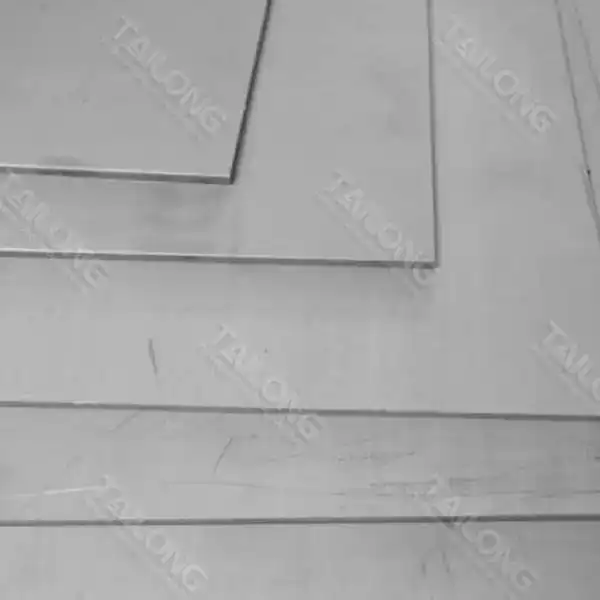
When selecting between High-Strength NiTi Alloy Plate and Standard NiTi Sheet materials, understanding their performance differences becomes crucial for engineering success. High-strength variants deliver superior tensile strength exceeding 1000 MPa compared to standard sheets' 800-900 MPa range. Enhanced superelasticity and fatigue resistance make high-strength plates ideal for demanding aerospace and automotive applications. Standard NiTi sheets excel in biomedical applications where flexibility matters more than ultimate strength. The choice depends on your specific application requirements and performance expectations.

Understanding NiTi Shape Memory Alloy Fundamentals
Nickel-titanium combinations speak to progressive materials combining special mechanical properties with uncommon strength. These shape memory combinations experience martensitic change, empowering them to recover unique shapes after distortion. The austenitic stage gives prevalent quality characteristics while maintaining great biocompatibility.
Three center fabric properties recognize NiTi alloys:
- Superelasticity permits 8-10% recoverable strain
- Shape memory impact, empowering temperature-activated recovery
- Exceptional erosion resistance in cruel environments
Manufacturing forms essentially impact last fabric properties. Warm treatment controls stage change temperatures and mechanical characteristics. Surface treatment upgrades erosion resistance and biocompatibility. Amalgam composition varieties influence quality, versatility, and change behavior.
If you require materials for therapeutic inserts requiring adaptability, the High-Strength NiTi Alloy Plate is more appropriate. Applications requesting the greatest quality advantage from high-strength variations with optimized metallurgical properties.
Mechanical Properties Analysis: Strength Meets Performance
Comprehensive testing reveals significant performance differences between high-strength plates and standard sheets. Tensile strength measurements show high-strength variants achieving 1000-1200 MPa versus 800-900 MPa for standard materials. Yield strength similarly increases from 500-600 MPa to 700-800 MPa, respectively.
Stress-strain behavior demonstrates enhanced pseudoelasticity in high-strength formulations. Fatigue resistance testing indicates 10^7 cycle endurance under 400 MPa stress for high-strength plates. Standard sheets typically withstand 10^6 cycles under similar conditions.
| Property | High-Strength NiTi Plate | Standard NiTi Sheet |
|---|---|---|
| Tensile Strength | 1000-1200 MPa | 800-900 MPa |
| Yield Strength | 700-800 MPa | 500-600 MPa |
| Elongation | 10-15% | 15-20% |
| Fatigue Life | 10^7 cycles | 10^6 cycles |
Damping capacity measurements reveal interesting trade-offs. Standard sheets exhibit superior energy absorption during low-stress applications. High-strength plates maintain consistent damping properties under elevated stress conditions.
If you need components experiencing high-cycle loading in aerospace applications, high-strength plates deliver superior performance. Medical device manufacturers requiring maximum flexibility should consider standard sheet options.
Application-Specific Performance Requirements
Aerospace applications require materials withstanding extraordinary temperature fluctuations and mechanical stress. High-strength NiTi plates exceed expectations in actuator fabric applications requiring exact situating control. Their upgraded weariness resistance guarantees dependable execution all through expanded benefit intervals.
Automotive industry applications benefit from prevalent erosion resistance and mechanical quality. Motor components and deplete frameworks require materials keeping up judgment beneath warm cycling. High-strength variations give upgraded strength in these demanding environments.
Medical embed applications prioritize biocompatibility near mechanical execution. Orthodontic wires utilize standard NiTi's predominant adaptability for quiet comfort. Stent fabric applications require adjusting quality with outspread adaptability for ideal vessel support.
Energy segment applications include components exposed to destructive situations and temperature extremes. Atomic applications require materials keeping up their properties under radiation exposure. Renewable vitality frameworks benefit from upgraded weariness resistance during wind stacking cycles.
If you require materials for basic aviation components requiring the greatest unwavering quality, high-strength plates offer prevalent execution edges. Biomedical applications prioritizing quiet consolation regularly favor standard sheet adaptability characteristics.
Cost-Benefit Analysis and Economic Considerations
Material costs reflect the fabrication complexity and execution capabilities. High-Strength NiTi Alloy Plate regularly fetched 20-30% more than standard sheets due to specialized handling necessities. Improved warm treatment forms and quality control measures contribute to premium pricing.
Lifecycle-fetched investigation uncovers critical focal points for high-strength variations in requesting applications. Diminished support prerequisites and expanded benefit intervals balanced starting fabric premiums. Component substitution recurrence diminishes considerably in high-stress environments.
Processing costs change based on fabric thickness and the complexity requirements. High-strength plates require specialized cutting methods and warm treatment conventions. Standard sheets offer simpler machinability for model advancement and low-volume production.
Performance benefits legitimize premium costs in basic applications. Upgraded weakness resistance translates to decreased disappointment rates and progressed framework stability. Aviation applications especially benefit from weight reserve funds and execution improvements.
If you require materials for high-volume, cost-sensitive applications, standard sheets give fabulous cost recommendations. Basic applications requiring most extreme unwavering quality legitimize high-strength plate speculations in spite of higher initial costs.
Manufacturing and Processing Considerations
Production techniques altogether impact last fabric characteristics. High-strength plates experience specialized manufacturing forms, making refined grain structures. Standard sheets utilize customary rolling strategies optimized for dimensional precision and surface finish.
Heat treatment conventions vary significantly between fabric grades. High-strength variations require exact temperature control amid maturing forms. Stage change temperatures must be carefully controlled to accomplish the target mechanical properties.
Quality control measures guarantee steady execution over generation batches. Non-destructive testing confirms the inner structure's astuteness and change behavior. Mechanical testing affirms that quality and versatility details meet application requirements.
Machining contemplations influence component fabrication costs and lead times. High-strength materials require specialized tooling and cutting parameters. Standard sheets are machine more promptly utilizing routine hardware and techniques.
If you require quick prototyping capabilities with standard machining gear, customary NiTi sheets offer preparation points of interest. Generation applications require the most extreme execution advantage from high-strength plate details in spite of handling complexity.
Future Trends and Technology Developments
Emerging innovations: High-Strength NiTi Alloy Plate. Added substance fabricating empowers complex geometries already incomprehensible with routine handling. Three-dimensional printing permits customized property angles within single components.
Advanced surface medications progress biocompatibility and erosion resistance. Nanostructured coatings upgrade particular execution characteristics while keeping up base fabric properties. These advancements grow application's conceivable outcomes over numerous industries.
Research centers on optimizing amalgam compositions for particular applications. Ternary increases adjust change temperatures and mechanical characteristics. These improvements empower custom-made arrangements for specialized execution requirements.
Industry appropriation proceeds growing as costs diminish and preparation capabilities progress. Car applications progressively utilize NiTi components for improved execution and proficiency. Therapeutic gadget developments use special fabric properties for progressive persistent outcomes.
If you require cutting-edge fabric arrangements for next-generation applications, high-strength NiTi plates speak to the mechanical bleeding edge. Conventional applications benefit from demonstrated standard sheet execution characteristics.
Tilong's High-Strength NiTi Alloy Plate Advantages
- Full Industry Chain Integration: Tilong controls the entire production process from raw material sourcing through final product delivery, ensuring consistent quality and competitive pricing for high-strength NiTi alloy plates.
- Advanced Manufacturing Capabilities: Our state-of-the-art facilities utilize precision forging and controlled thermal treatment processes, producing plates with tensile strengths exceeding 1200 MPa while maintaining excellent superelasticity.
- Superior Quality Control Systems: Every high-strength NiTi plate undergoes comprehensive testing, including mechanical property verification, phase transformation analysis, and corrosion resistance evaluation to ensure aerospace-grade reliability.
- Customization Expertise: Tilong's engineering team works directly with customers to optimize alloy compositions, dimensions, and surface treatments for specific application requirements in aerospace, automotive, and energy sectors.
- Technical Support Excellence: Our materials engineers provide ongoing consultation throughout project development, offering guidance on material selection, processing parameters, and application optimization strategies.
- Global Supply Chain Reliability: With established logistics networks and inventory management systems, Tilong ensures consistent material availability and timely delivery to support critical production schedules worldwide.
- Cost-Effective Solutions: Despite superior performance characteristics, our integrated manufacturing approach delivers competitive pricing while maintaining the highest quality standards for high-strength NiTi alloy plates.
- Research and Development Leadership: Continuous investment in advanced metallurgy research enables Tilong to offer cutting-edge material solutions that exceed industry performance benchmarks and customer expectations.
- Comprehensive Material Traceability: Complete documentation and certification accompany every shipment, providing full material history and performance data for aerospace and medical applications requiring strict quality compliance.
- Rapid Response Capabilities: Our streamlined communication systems and flexible production scheduling enable quick turnaround times for both standard products and custom material specifications, supporting urgent project requirements.
Conclusion
The choice between high-strength NiTi alloy plates and standard NiTi sheets depends on specific application requirements and performance priorities. High-strength variants excel in demanding aerospace and automotive applications requiring maximum fatigue resistance and mechanical strength. Standard sheets remain optimal for medical applications, prioritizing flexibility and biocompatibility. Understanding these performance differences enables informed material selection decisions that optimize component performance while managing costs effectively. Both materials offer unique advantages that continue expanding NiTi applications across multiple industries.
Partner with Tilong for Premium High-Strength NiTi Alloy Plate Solutions
Tilong stands as a leading high-strength NiTi alloy plate manufacturer, delivering exceptional materials that exceed industry performance standards. Our commitment to technological innovation and quality excellence ensures your critical applications receive materials engineered for maximum reliability and durability.
Our comprehensive material solutions address the most demanding aerospace, automotive, and energy sector requirements. Each high-strength NiTi plate undergoes rigorous quality control processes, ensuring consistent mechanical properties and superior fatigue resistance. Advanced manufacturing capabilities enable customized solutions tailored to your specific application needs.
Procurement managers and R&D engineers worldwide trust Tilong's expertise in delivering materials that enhance system performance while reducing maintenance costs. Our integrated supply chain management and ERP-enabled ordering systems streamline procurement processes and ensure reliable material availability.
Technical support teams work closely with your engineering staff to optimize material selection and application strategies. Whether developing next-generation aerospace components or enhancing automotive system reliability, Tilong provides the materials expertise and product quality essential for project success.
Ready to experience the performance advantages of premium high-strength NiTi alloy plates? Our materials engineers are available to discuss your specific requirements and recommend optimal solutions for your applications. Contact us at Tailong@tilongtitanium.com to explore how Tilong's advanced materials can enhance your product performance and reliability.
References
1. Otsuka, K., & Ren, X. (2005). Physical metallurgy of Ti-Ni-based shape memory alloys. Progress in Materials Science, 50(5), 511-678.
2. Mohd Jani, J., Leary, M., Subic, A., & Gibson, M. A. (2014). A review of shape memory alloy research, applications, and opportunities. Materials & Design, 56, 1078-1113.
3. Pelton, A. R., Stockel, D., & Duerig, T. W. (2000). Medical uses of nitinol. Materials Science Forum, 327, 63-70.
4. Shaw, J. A., & Kyriakides, S. (1997). On the nucleation and propagation of phase transformation fronts in a NiTi alloy. Acta Materialia, 45(2), 683-700.
5. Miyazaki, S., Kim, H. Y., & Hosoda, H. (2006). Development and characterization of Ni-free Ti-base shape memory and superelastic alloys. Materials Science and Engineering: A, 438, 18-24.
6. Lagoudas, D. C., Hartl, D. J., Chemisky, Y., Machado, L., & Popov, P. (2012). Constitutive model for the numerical analysis of phase transformation in polycrystalline shape memory alloys. International Journal of Plasticity, 32, 155-183.