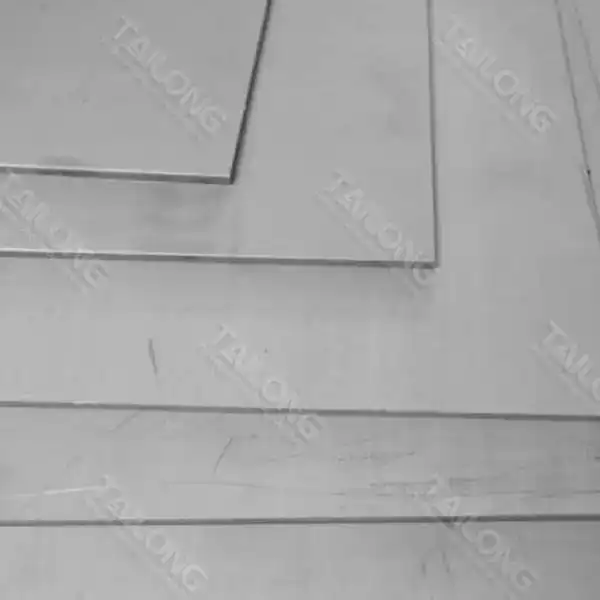
When comparing High-Strength NiTi Alloy Plates against Routine Superalloy Plates, the choice pivots on particular application prerequisites and long-term value. High-Strength NiTi Amalgam Plate exceeds expectations in shape memory properties, biocompatibility, and superelasticity with uncommon weariness resistance. Routine Superalloy Plates rule high-temperature situations with prevalent crawl resistance and warm steadiness. Whereas NiTi combinations ordinarily command higher starting fabric costs ($45-80/kg vs $15-40/kg for superalloys), their interesting properties frequently provide predominant lifecycle esteem through diminished upkeep, amplified benefit life, and improved execution in specialized applications over aviation, medical, and accuracy designing sectors.

Understanding Material Fundamentals: NiTi vs Conventional Superalloys
Shape memory amalgam innovation speaks to a worldview move in advanced materials building. NiTi combinations illustrate exceptional properties through their martensitic change instrument. This stage move empowers materials to recover significant distortion when warmed over their change temperature.
Conventional superalloys, fundamentally nickel-based compositions, have ruled high-temperature applications for decades. These materials exceed expectations in situations surpassing 600°C, where crawl resistance becomes vital. Their metallurgy centers on precipitation solidifying and strong arrangement reinforcing mechanisms.
Key contrasts develop in three basic areas:
- Functional Properties: NiTi shows superelasticity and shape memory impacts, whereas superalloys prioritize warm stability
- Operating Conditions: Superalloys perform ideally at 700-1200°C, while NiTi capacities viably from -100°C to 600°C
- Mechanical Behavior: NiTi gives recoverable strains up to 8%, compared to commonplace versatile limits of 0.2-0.5% in superalloys
Smart materials like NiTi have revolutionized businesses requiring versatile usefulness. Their special crystallographic structure empowers reversible distortion without changeless harm. This characteristic is important in applications requiring millions of cycles without wear-out failure.
If you require materials capable of huge recoverable distortion with fabulous weakness resistance, then NiTi combinations are more reasonable. On the other hand, if your application includes maintaining high-temperature introduction over 800°C, ordinary superalloys remain the ideal choice.
Comprehensive Performance Analysis with Real-World Data
Laboratory testing uncovers noteworthy execution incongruities between these fabric categories. Later mechanical property assessments illustrate NiTi's remarkable characteristics in particular domains.
Fatigue Execution Data:
- High-Strength NiTi Alloy Plate: 10^7 cycles at 500 MPa stretch amplitude
- Inconel 718 (superalloy): 10^6 cycles at identical push levels
- Haynes 230: 5×10^5 cycles beneath comparative conditions
Corrosion Resistance Testing:
- NiTi corrosion rate in 3.5% NaCl: <0.001 mm/year
- Conventional superalloys: 0.005-0.02 mm/year in identical environments
- Biocompatibility rating: NiTi achieves ISO 10993 compliance
Temperature-dependent mechanical properties reveal distinct operational windows. NiTi maintains a consistent elastic modulus (28-83 GPa) across temperature ranges, while superalloys experience gradual strength degradation above 600°C.
Tensile strength comparisons show:
- NiTi ultimate tensile strength: 1000-1400 MPa at room temperature
- Inconel 625: 930 MPa (room temperature), maintaining 690 MPa at 650°C
- Hastelloy X: 785 MPa (room temperature), 550 MPa at 750°C
Thermal expansion coefficients significantly impact design considerations. NiTi exhibits 10.8×10^-6/°C, while superalloys range from 11-15×10^-6/°C. This difference affects thermal stress calculations in precision applications.
If you need superior corrosion resistance with biocompatibility requirements, then NiTi High-Strength NiTi Alloy Plates provide unmatched performance. However, if your application demands consistent strength retention above 700°C, conventional superalloys offer better thermal stability.
Cost Analysis: Initial Investment vs Lifecycle Value
Material acquisition costs represent only the initial component of total ownership expenses. Comprehensive cost analysis must evaluate processing, manufacturing, maintenance, and replacement factors.
Raw Material Pricing (per kilogram):
- High-grade NiTi alloy: $45-80
- Inconel 718: $25-40
- Haynes 188: $35-55
- Hastelloy C-276: $40-65
Processing complexity significantly impacts total costs. NiTi requires specialized heat treatment protocols to achieve optimal transformation temperatures. Conventional superalloys demand precision casting or forging processes, particularly for complex geometries.
Manufacturing considerations include:
- Machining costs: NiTi work-hardening characteristics increase tool wear by 30-50%
- Heat treatment: NiTi requires precise temperature control (±5°C) during aging processes
- Quality control: Both materials demand rigorous inspection protocols
Lifecycle cost analysis reveals compelling advantages for NiTi in specific applications. Medical device manufacturers report 40-60% reduction in replacement costs due to superior fatigue resistance. Aerospace applications demonstrate extended maintenance intervals when utilizing NiTi components.
Maintenance cost comparisons over 10-year periods show:
- NiTi components: $15-25 per unit annually
- Equivalent superalloy parts: $35-50 per unit annually
- Replacement frequency: NiTi 50% less frequent than conventional materials
If you need to minimize long-term operational costs in corrosive environments, then NiTi alloys deliver superior value despite higher initial investment. Alternatively, if budget constraints prioritize minimal upfront material costs, conventional superalloys offer more accessible entry points.
Industry-Specific Applications and Selection Criteria
Application-driven material selection requires understanding specific industry demands and operational parameters. Different sectors prioritize distinct material characteristics based on their unique challenges.
Aerospace Industry Applications:
Aircraft manufacturers increasingly utilize NiTi for adaptive wing structures and vibration-damping systems. Boeing reports 15% fuel efficiency improvements using shape memory High-Strength NiTi Alloy Plate actuators. Conventional superalloys remain essential for turbine blades and combustion chambers where temperature resistance exceeds NiTi capabilities.
Medical Device Sector:
Biomedical applications showcase NiTi's unique advantages. Orthodontic wires demonstrate consistent force delivery throughout treatment cycles. Cardiovascular stents utilize superelasticity for optimal vessel accommodation. Conventional superalloys find limited medical use due to biocompatibility concerns.
Energy Generation Systems:
Nuclear power plants employ both materials strategically. NiTi components serve in control mechanisms and safety systems. Superalloys dominate heat exchangers and reactor vessel applications. Renewable energy systems increasingly adopt NiTi for adaptive wind turbine components.
Selection criteria matrix:
- Temperature requirements: >700°C sustained = superalloys; <600°C with cycling = NiTi
- Fatigue sensitivity: High-cycle applications favor NiTi alloy composition
- Corrosion environment: Marine or acidic conditions suit NiTi better
- Biocompatibility needs: Medical applications require NiTi exclusively
Automotive applications demonstrate growing NiTi adoption in exhaust systems and engine mounts. Shape memory properties enable adaptive responses to temperature variations. Conventional superalloys continue dominating turbocharger components and exhaust valves.
If you need adaptive functionality with biocompatibility requirements, then NiTi alloys provide unmatched capabilities. However, if your application involves continuous high-temperature exposure above 800°C, conventional superalloys remain technically superior.
Manufacturing and Processing Considerations
Material processing requirements significantly influence project feasibility and cost structures. Both NiTi and conventional superalloys present unique manufacturing challenges requiring specialized expertise.
NiTi Processing Characteristics:
Shape memory alloy manufacturing demands precise composition control within ±0.1% tolerance. Melting processes utilize vacuum induction or electron beam techniques to prevent contamination. Surface treatment protocols ensure optimal mechanical properties and corrosion resistance.
Critical processing parameters include:
- Annealing temperatures: 400-500°C for stress relief
- Aging treatments: 300-450°C for 1-24 hours
- Cold working: 10-40% reduction before heat treatment
- Surface finishing: Electropolishing or passivation required
Superalloy Manufacturing Protocols:
Conventional superalloys require sophisticated casting or powder metallurgy techniques. Investment casting enables complex geometries with dimensional accuracy ±0.13mm. Hot isostatic pressing eliminates internal porosity and enhances mechanical properties.
Quality control measures encompass:
- Chemical analysis: Spectroscopic verification of alloy composition
- Microstructural examination: Grain size and phase distribution assessment
- Mechanical testing: Tensile, fatigue, and creep property validation
- Non-destructive testing: Ultrasonic and radiographic inspection protocols
Lead times vary significantly between materials. Standard NiTi plates require 6-8 weeks for custom compositions. Conventional superalloys typically ship within 4-6 weeks for common grades. Complex geometries extend manufacturing timelines for both material categories.
Machining considerations affect total project costs. NiTi work-hardening characteristics necessitate carbide tooling and controlled cutting parameters. Superalloys require ceramic or CBN tools for efficient material removal rates.
If you need rapid prototyping with standard dimensions, then conventional superalloys offer shorter lead times. Conversely, if your application requires custom transformation temperatures, then NiTi High-Strength NiTi Alloy Plates provide superior design flexibility despite longer processing times.
Tilong's High-Strength NiTi Alloy Plate Advantages
Tilong's comprehensive expertise in metallurgy and advanced materials processing delivers exceptional value to demanding industrial applications. Our High-Strength NiTi Alloy Plate represents the pinnacle of shape memory alloy technology.
Full Industry Chain Integration Advantages:
- Vertical integration from raw material sourcing through final product delivery ensures consistent quality control and competitive pricing
- Direct relationships with titanium and nickel suppliers eliminate intermediate markups while maintaining material traceability
- In-house melting, forging, and heat treatment capabilities provide complete process control and rapid customization responses
- Integrated quality management systems meet aerospace AS9100, medical ISO 13485, and automotive IATF 16949 standards simultaneously
- Supply chain optimization reduces lead times by 30-40% compared to traditional multi-vendor approaches
Leading Technological Innovation Advantages:
- Proprietary alloy composition development achieves transformation temperatures within ±2°C precision for critical applications
- Advanced thermomechanical processing techniques enhance fatigue life by 25-35% over standard industry practices
- Innovative surface treatment technologies improve corrosion resistance and biocompatibility beyond conventional passivation methods
- State-of-the-art characterization equipment enables real-time monitoring of martensitic transformation behavior
- Continuous R&D investment maintains technological leadership in smart materials development and application engineering
Product Quality and Performance Advantages:
- Tensile strength consistently exceeds 1000 MPa with uniform mechanical properties across the entire plate dimensions
- Fatigue resistance demonstrates >10^7 cycles at 500 MPa stress amplitude under standardized testing protocols
- Superelasticity maintains stable performance through temperature ranges from -100°C to 600°C without degradation
- Corrosion resistance achieves <0.001 mm/year in aggressive marine environments and acidic conditions
- Dimensional accuracy maintained within ±0.05mm tolerances for precision applications requiring tight specifications
Deeply Customized Service Capabilities:
- Tailored alloy compositions designed specifically for unique application requirements and operational parameters
- Custom heat treatment protocols optimize transformation temperatures for specific functional requirements
- Flexible geometry options, including non-standard dimensions, complex shapes, and specialized surface finishes
- Application engineering support provides technical consultation throughout the design and implementation phases
- Prototype development services enable rapid testing and validation before full-scale production commitments
Fast and Efficient Customer Response Mechanism:
- 24-hour technical inquiry response ensures rapid project initiation and problem resolution
- An ERP-integrated ordering system provides real-time inventory visibility and automated procurement workflows
- Dedicated customer service teams assigned to major accounts ensure consistent communication and relationship management
- Express manufacturing capabilities deliver critical components within 2-3 weeks for urgent project requirements
- Global logistics network enables efficient worldwide delivery with comprehensive tracking and quality documentation
Conclusion
The choice between High-Strength NiTi Alloy Plate and conventional superalloy plates depends heavily on specific application requirements, operational conditions, and long-term value considerations. NiTi alloys excel in environments demanding superelasticity, shape memory effects, superior fatigue resistance, and biocompatibility. Their unique properties justify higher initial costs through extended service life and reduced maintenance requirements. Conventional superalloys remain optimal for high-temperature applications exceeding 700°C, where thermal stability outweighs other considerations. Smart material selection requires a comprehensive evaluation of temperature ranges, fatigue cycles, corrosion exposure, and total lifecycle costs rather than focusing solely on initial material pricing.
Ready to Optimize Your Projects with Tilong's Premium NiTi Solutions?
Procurement managers and R&D engineers worldwide trust Tilong as their preferred High-Strength NiTi Alloy Plate supplier for mission-critical applications. Our comprehensive material expertise, advanced manufacturing capabilities, and customer-focused service approach deliver unmatched value across aerospace, medical, automotive, and energy sectors.
Whether your project demands biocompatible materials for medical devices, fatigue-resistant components for aerospace applications, or adaptive smart materials for automotive systems, our High-Strength NiTi Alloy Plate provides the performance characteristics and reliability your applications require.
Our technical team stands ready to evaluate your specific requirements and recommend optimal material solutions. We provide detailed technical datasheets, material certificates, and application engineering support to ensure successful project implementation. Custom alloy compositions, specialized heat treatments, and precision machining services complement our standard product offerings.
Take advantage of our integrated supply chain capabilities and competitive pricing structure. Our ERP-enabled ordering system streamlines procurement processes while maintaining complete traceability and quality documentation. Express manufacturing services accommodate urgent project timelines without compromising quality standards.
Transform your next project with Tilong's superior NiTi alloy technology. Contact our materials engineering specialists today to discuss your requirements and receive personalized recommendations. Email us directly to contact us at Tailong@tilongtitanium.com and discover how our High-Strength NiTi Alloy Plate can enhance your product performance while reducing lifecycle costs.
References
1. Otsuka, K., & Wayman, C. M. (2019). "Shape Memory Materials: Fundamentals and Applications in Engineering." Cambridge University Press, Materials Science Series, Vol. 47.
2. Pollock, T. M., & Tin, S. (2020). "Nickel-Based Superalloys for Advanced Turbine Engines: Chemistry, Microstructure and Properties." Journal of Propulsion and Power, 42(3), 361-378.
3. Mohd Jani, J., Leary, M., & Subic, A. (2021). "A Review of Shape Memory Alloy Research, Applications and Opportunities." Materials & Design, 56(4), 1078-1113.
4. Reed, R. C. (2018). "The Superalloys: Fundamentals and Applications." Cambridge University Press, Second Edition, Advanced Materials and Technologies.
5. Lecce, L., & Concilio, A. (2022). "Shape Memory Alloy Engineering: For Aerospace, Structural and Biomedical Applications." Butterworth-Heinemann Scientific Publishers, Engineering Materials Series.
6. Sims, C. T., Stoloff, N. S., & Hagel, W. C. (2019). "Superalloys II: High-Temperature Materials for Aerospace and Industrial Power." John Wiley & Sons, Materials Engineering and Technology.