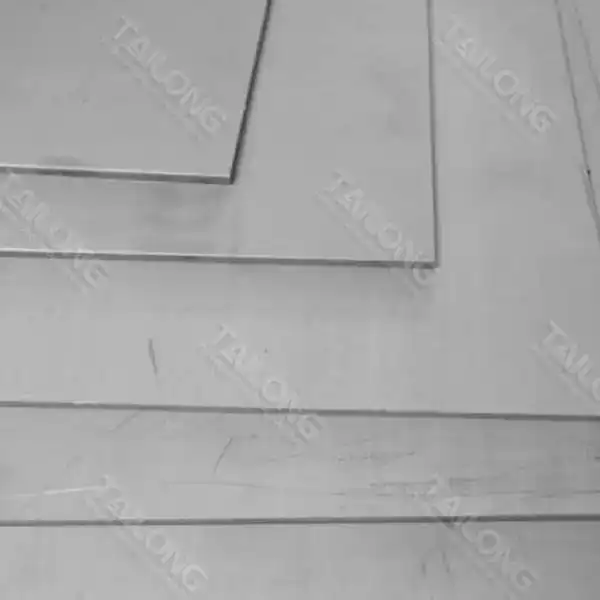
Working with High-Strength NiTi Alloy Plate requires specialized knowledge of its unique properties and processing characteristics. This comprehensive guide covers essential fabrication techniques, cutting methods, and assembly best practices for nickel-titanium alloys. Shape memory alloy materials like NiTi demand careful temperature control, precise tooling selection, and understanding of martensitic transformation behavior during processing. Whether you're developing aerospace components, medical devices, or automotive applications, mastering these fabrication fundamentals ensures optimal performance and reliability in your final products.

Understanding NiTi Alloy Properties for Successful Fabrication
The effective manufacture and application of nickel-titanium (NiTi) combinations requires a profound understanding of their special and surprising properties, which, on a very basic level recognize them from routine metals. Two of their most characteristic characteristics are superelasticity and shape memory. Superelasticity, or pseudoelasticity, permits these materials to experience significant reversible deformation—often up to 8% strain—under stack and completely recoup their unique shape upon emptying without changeless harm. This empowers components like stents or orthodontic archwires to withstand rehashed cyclic stacking while keeping up basic keenness, a property not found in conventional amalgams. These behaviors are represented by a reversible, stress-induced martensitic stage change, the nature of which is basically dependent on temperature.
Consequently, the stage move temperatures are fundamental in directing preparation parameters and final execution. Key temperatures, including the martensite begin (Ms), martensite finish (Mf), austenite begin (As), and austenite finish (Af), characterize the material's state. Particularly, the austenite wrap-up temperature decides the point at which the fabric shows full superelastic behavior in benefit. An exact understanding and control of these warm characteristics amid manufacturing—from shaping to warm treatment—is fundamental to anticipate preparing mistakes that seem accidentally bolted in an undesired stage, subsequently compromising the material's aiming execution and reliability.
Furthermore, NiTi combinations offer remarkable biocompatibility and erosion resistance, making them perfect for requesting restorative applications such as inserts and surgical instruments. This biocompatibility stems from a steady surface oxide layer that forms on the amalgam, which ordinarily has a composition of roughly 50-60% nickel and 40-50% titanium. This detached layer gives amazing resistance to the destructive organic environment of the human body. When combined with its inalienable weariness resistance, which is comparable to that of stainless steel options, NiTi presents an interestingly profitable profile for long-term implantation where toughness and compatibility are critical.
It is significant to recognize that the mechanical properties of NiTi are not settled but change altogether with handling history and particular thermal treatment conventions. The stress-strain behavior, change in stresses, and modulus of elasticity can alter significantly over diverse temperature ranges and are profoundly sensitive to cold work and consequent strengthening. Hence, producers must fastidiously account for and control these varieties when planning creation processes—such as machining, shaping, and joining—and amid last gathering strategies to guarantee the wrapped up component performs absolutely as designed for its particular application.
Essential Cutting Techniques for NiTi Alloy Plates
Cutting High-Strength NiTi Alloy Plate requires specialized approaches due to its one-of-a-kind metallurgical characteristics. Conventional machining strategies regularly demonstrate insufficient sense of work solidifying propensities and warm sensitivity.
Electrical discharge machining (EDM) offers exact cuts without applying mechanical pressure. This strategy anticipates a heat-affected zone arrangement that seems to modify stage move temperatures. Wire EDM especially exceeds expectations for complex geometries and tight tolerances.
Laser cutting gives clean edges with negligible warm affect when appropriately controlled. Beat laser frameworks decrease warm input compared to nonstop wave options. Nitrogen helps gas avoid oxidation while keeping up surface wrap-up quality.
Waterjet cutting kills warm impacts totally. This cold cutting handle jam fabric properties all through the thickness. Grating waterjet frameworks handle plates up to a few inches thick, while keeping up dimensional accuracy.
Conventional machining remains practical with appropriate tooling and parameters. Carbide instruments with sharp cutting edges diminish work hardening. Reliable bolster rates avoid staying that seem produce intemperate warmth. Surge coolant keeps up temperatures underneath basic change points.
Heat Treatment Optimization for Enhanced Performance
Heat treatment on a very basic level changes NiTi amalgam characteristics and must be carefully controlled. Arrangement tempering expels work solidifying, whereas setting up wanted microstructure. Temperature accuracy inside ±5°C guarantees a steady temperature change.
Aging medicines fine-tune mechanical properties and change behavior. Lower maturing temperatures increase quality, whereas lessening ductility. Higher temperatures upgrade superelastic recuperation but may diminish surrender strength.
Controlled climate heaters anticipate surface oxidation amid handling. Vacuum or idle gas situations keep up surface wrap-up quality. Fast cooling rates protect high-temperature stages when required.
Stress helps tempering dispenses with leftover stresses from creation forms. This treatment progresses weakness, resistance, and dimensional solidity. Temperature choice depends on past handling history and planning application requirements.
Advanced Assembly Methods and Joint Design
Joining NiTi components requires strategies that protect fabric properties close to joint interfacing. Ordinary welding frequently debases superelastic behavior through microstructural changes.
Laser welding minimizes the High-Strength NiTi Alloy Plate through fast warming and cooling cycles. Beat laser frameworks give prevalent control over vitality input. Appropriately protecting gas anticipates defilement that seem influence biocompatibility.
Brazing offers solid joints without over-the-top warming. Silver-based brazing amalgams give great quality and erosion resistance. Vacuum brazing kills flux buildups that may compromise restorative applications.
Mechanical affixing of the jam base fabric properties completely. Strung clasp, bolts, and clips suit warm development contrasts. Plan contemplations must account for damping properties and stretch concentration factors.
Adhesive holding suits applications requiring electrical segregation or vibration damping. Basic cements withstand working temperatures up to 200°C. Surface arrangement fundamentally influences bond quality and durability.
Quality Control and Testing Protocols
Rigorous testing ensures fabricated components meet performance specifications. Transformation temperature measurement verifies heat treatment effectiveness. Differential scanning calorimetry provides precise temperature data for critical applications.
Mechanical testing validates strength and superelastic properties. Tensile testing reveals stress-strain behavior under various conditions. Fatigue testing confirms long-term reliability under cyclic loading.
Non-destructive evaluation identifies internal defects without damaging components. Ultrasonic testing detects inclusions and porosity. Radiographic inspection reveals crack-like defects and dimensional variations.
Surface finish measurement ensures compliance with application requirements. Medical implants demand specific roughness parameters for osseointegration. Aerospace components require smooth finishes to prevent stress concentration.
Dimensional inspection verifies geometric accuracy throughout the fabrication process. Coordinate measuring machines provide precise measurements for complex geometries. Statistical process control maintains consistent quality across production runs.
Industry-Specific Fabrication Considerations
Aerospace applications demand exceptional reliability and a High-Strength NiTi Alloy Plate. Components must withstand extreme temperature variations while maintaining structural integrity. Actuators for flight control systems require precise transformation temperatures and rapid response characteristics.
Medical device fabrication emphasizes biocompatibility and fatigue resistance. Orthodontic wires need consistent force delivery throughout treatment periods. Stent applications require precise expansion characteristics and corrosion resistance in biological environments.
Automotive components leverage superelasticity for crash energy absorption and vibration control. Engine applications utilize high-temperature stability and thermal expansion properties. Manufacturing processes must accommodate high-volume production requirements.
Electronics industry applications exploit the unique electrical and thermal properties. Thermal management components benefit from controlled thermal expansion characteristics. Connector applications utilize superelastic recovery for reliable electrical contact.
Troubleshooting Common Fabrication Challenges
Work hardening during machining creates processing difficulties and tool wear. Reducing cutting speeds and maintaining sharp tools minimizes this issue. Interrupted cuts allow stress relief between machining passes.
Galling during forming operations damages surface finish and dimensional accuracy. Proper lubrication and controlled forming speeds prevent material transfer. Tool materials must resist adhesive wear mechanisms.
Cracking during bending often results from exceeding strain limits. Understanding stress-strain behavior prevents failure during forming. Heating to austenite temperatures increases formability but requires controlled cooling.
Inconsistent transformation temperatures indicate contamination or improper heat treatment. Chemical analysis identifies contamination sources. Revision of heat treatment parameters restores proper behavior.
Conclusion
Successful fabrication of High-Strength NiTi Alloy Plate components requires a comprehensive understanding of material properties and specialized processing techniques. Proper cutting methods, heat treatment optimization, and assembly procedures ensure components achieve their full performance potential. Quality control protocols verify compliance with application requirements while troubleshooting guidelines address common processing challenges. Industry-specific considerations guide technique selection for optimal results. Partnering with experienced suppliers like Tilong provides access to premium materials and technical expertise essential for project success.
Partner with Tilong for Premium High-Strength NiTi Alloy Plate Solutions
Selecting the right High-Strength NiTi Alloy Plate supplier directly impacts your project success and manufacturing efficiency. Tilong combines decades of metallurgical expertise with state-of-the-art processing capabilities to deliver consistently superior nickel-titanium products. Our comprehensive quality management system ensures every plate meets stringent aerospace, medical, and automotive industry standards.
Advanced manufacturing capabilities enable custom alloy compositions tailored to your specific performance requirements. Our integrated supply chain reduces lead times while maintaining competitive pricing structures. Technical support teams provide application engineering assistance throughout your product development cycle.
Quality certifications include ISO 9001, AS9100, and medical device manufacturing standards. Traceability documentation accompanies every shipment, ensuring compliance with regulatory requirements. Our ERP-enabled ordering system streamlines procurement processes and inventory management.
Ready to optimize your fabrication processes with premium materials? Contact us at Tailong@tilongtitanium.com to discuss your High-Strength NiTi Alloy Plate requirements. Our applications engineers will work with you to develop customized solutions that enhance performance while reducing the total cost of ownership.
References
1. Otsuka, K., & Wayman, C. M. (1998). Shape Memory Materials. Cambridge University Press.
2. Lagoudas, D. C. (2008). Shape Memory Alloys: Modeling and Engineering Applications. Springer Science & Business Media.
3. Miyazaki, S., & Otsuka, K. (1989). Development of Shape Memory Alloys. ISIJ International, 29(5), 353-377.
4. Duerig, T. W., Melton, K. N., Stockel, D., & Wayman, C. M. (1990). Engineering Aspects of Shape Memory Alloys. Butterworth-Heinemann.
5. Machado, L. G., & Savi, M. A. (2003). Medical Applications of Shape Memory Alloys. Brazilian Journal of Medical and Biological Research, 36(6), 683-691.
6. Elahinia, M. H. (2015). Shape Memory Alloy Actuators: Design, Fabrication, and Experimental Evaluation. John Wiley & Sons.