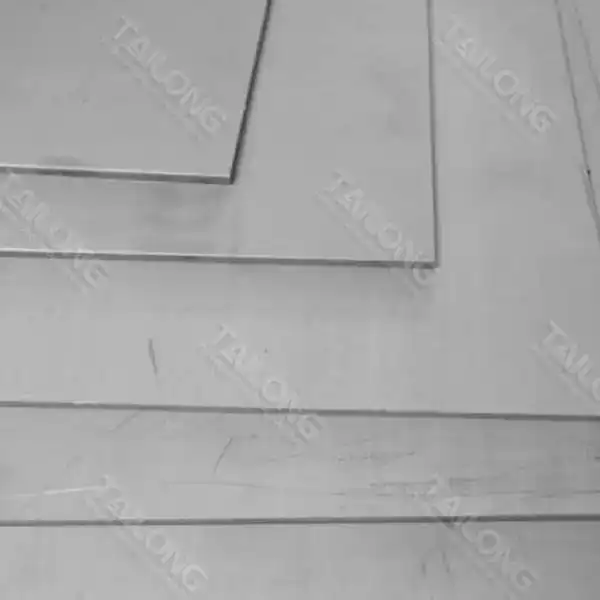
Clad Titanium Copper Plate offers exceptional thermal conductivity, minimal maintenance requirements, and extended service life, making it an ideal choice for demanding industrial applications. This innovative composite material combines titanium's superior corrosion resistance with copper's excellent thermal properties, delivering unmatched performance in aerospace, automotive, electronics, and energy sectors. Engineers worldwide rely on this bimetallic plate technology to solve complex challenges where traditional materials fall short. The metallurgical bonding between these dissimilar metals creates a unique solution that maintains structural integrity while optimizing heat transfer efficiency.

Understanding Key Performance Parameters of Titanium-Copper Composite Materials
A comprehensive audit of the specialized determinations for our titanium-copper composite fabric clearly depicts the prevalent execution profile that sets it apart from customary solid metal options. This built collaboration is most apparent in its remarkable warm administration capabilities, where the copper side accomplishes tall warm conductivity of up to 400 W/mK, encouraging fast warm scattering, whereas the titanium side concurrently keeps up its exceptional auxiliary quality and low-density characteristics. The material's ductile quality values emphasize its strong mechanical keenness; the titanium areas give tall quality, regularly accomplishing up to 500 MPa, whereas the Clad Titanium Copper Plate components contribute complementary quality of around 210 MPa, resulting in a composite that successfully stands up to distortion and mechanical stretch beneath load.
The composite's operational flexibility is tied down by a noteworthy temperature resistance range crossing from cryogenic conditions of -200°C to elevated temperatures of 500°C. This wide benefit window empowers solid execution in extraordinary warm situations where single metals would come up short. Besides, the vital combination of metals accomplishes an ideal thickness proportion, striking a basic balance between high quality and noteworthy weight reduction—a key advantage in weight-sensitive applications. Erosion resistance testing in forceful situations approves another center advantage, with the fabric illustrating prevalent long-term execution in seawater immersion and exposure to different chemicals compared to numerous single-metal arrangements, as the titanium layer gives a detached, steady barrier.
For electrical and electronic applications, the composite offers an interesting dual-nature conductivity profile, permitting architects to use copper's amazing electrical conductivity on one confront whereas utilizing titanium's quality and erosion resistance on the other. Progressed solid-state holding and rolling creation procedures allow critical customization over a wide thickness range, ordinarily from 1mm to 50mm, to meet particular design requirements. Collectively, this optimized set of parameters—encompassing warm, mechanical, chemical, and physical properties—makes the titanium-copper composite a perfect and tough arrangement for demanding applications such as progressed warm exchangers, basic marine designing components, and aviation structures, where life span, unwavering quality, and execution beneath pressure are paramount.
Core Advantages That Drive Industrial Performance
High conductivity stands as the essential advantage driving appropriation over businesses. The copper layer guarantees productive warm scattering, whereas titanium gives basic support. This combination disposes of the requirement for partitioned cooling frameworks in numerous applications.
Low upkeep necessities stem from the characteristic properties of both metals. Titanium's common oxide layer secures against natural degradation. Copper's antimicrobial properties decrease natural fouling in marine applications. Together, they make a self-maintaining surface that requires negligible intervention.
Extended benefit life comes about from the synergistic impacts of metal cladding innovation. The bimetallic plate stands up to warm development stresses that ordinarily cause disappointment in single-metal components. Welding innovation progresses have progressed the bond quality between layers, avoiding delamination over time.
Lightweight characteristics develop from the optimized thickness conveyance. Engineers can indicate more slender Clad Titanium Copper Plate areas, whereas it was, conductivity things, and thicker titanium zones where quality necessities rule. This specific approach diminishes by and large weight while keeping up execution standards.
Tilong's Superior Manufacturing Excellence vs. Industry Standards
Our progressed fabricating sets new benchmarks for composite fabric quality. We utilize restrictive holding strategies that make stronger metallurgical associations than customary blast welding strategies. Quality control measures incorporate ultrasonic testing at each generation stage to guarantee culminate layer adhesion.
Customization capabilities surpass industry standards through our adaptable generation frameworks. We oblige interesting dimensional necessities and surface wrap-up determinations that other providers cannot coordinate. Our ERP-enabled stock administration guarantees steady fabric accessibility for large-scale projects.
Testing conventions outperform standard prerequisites with extra erosion resistance confirmation and warm cycling assessment. Each bunch experiences comprehensive mechanical property testing to ensure execution consistency. Documentation incorporates point-by-point fabric certificates and traceability records for aviation applications.
Production capacity permits us to handle both model amounts and high-volume orders effectively. Lead times stay competitive while keeping up strict quality measures. Our specialized back group gives building help throughout the planning and usage phases.
Maximizing Performance Through Proper Selection and Application
Material selection begins with understanding the specific thermal and mechanical requirements of your application. Consider the operating temperature range and determine whether continuous or intermittent heat transfer will occur. Evaluate the corrosion environment to ensure appropriate grade selection.
Installation best practices involve proper surface preparation and compatible joining methods. Use titanium-compatible welding consumables when fabrication requires welding. Avoid galvanic corrosion by selecting appropriate fasteners and gasket materials for assembly.
Design optimization can enhance the natural benefits of the composite structure. Position the Clad Titanium Copper Plate side toward heat sources for maximum thermal efficiency. Orient titanium surfaces toward corrosive environments for protection. Consider thermal expansion differences during design to prevent stress concentration.
Maintenance scheduling should account for the extended service intervals possible with this material. Inspection frequency can be reduced compared to single-metal alternatives. Focus monitoring efforts on joint areas and attachment points rather than the base material itself.
Essential Considerations for Optimal Performance
Thermal cycling effects require careful evaluation during design phases. Repeated heating and cooling can create stress at the interface between metals. Proper design accommodates these thermal expansion differences through appropriate geometry and support structures.
Chemical compatibility varies between the two metal surfaces. While titanium resists most chemicals excellently, Clad Titanium Copper Plate may require protection in certain environments. Consider coating options or orientation adjustments to optimize chemical resistance for specific applications.
Machining operations need specialized approaches due to the different properties of each metal layer. Cutting speeds and tool selection must account for both materials simultaneously. Proper coolant selection prevents contamination between the metal types during fabrication.
Storage and handling procedures protect the material investment. Avoid contact with iron or steel that could cause galvanic reactions. Use appropriate lifting equipment for large plates to prevent bending stresses that could affect the bond integrity.
Conclusion
Clad titanium copper plates represent the optimal solution for applications demanding high thermal conductivity, minimal maintenance, and extended service life. The unique combination of titanium's strength and copper's thermal properties creates superior performance compared to single-metal alternatives. Tilong's manufacturing excellence ensures consistent quality and reliable supply for critical industrial applications. Our technical expertise and customer support help engineers maximize the benefits of this advanced composite material technology.
FAQ
Q: What thickness ranges are available for clad titanium copper plates?
A: We manufacture plates ranging from 1mm to 50mm total thickness with customizable ratios between the titanium and copper layers. Standard configurations include 70/30 and 50/50 thickness ratios, but we can adjust these based on your specific thermal and mechanical requirements.
Q: How does the bonding strength compare to solid metal alternatives?
A: Our metallurgical bonding process creates interface strengths exceeding 300 MPa, which surpasses many solid metal joints. The bond remains intact through thermal cycling from -200°C to 500°C without delamination or strength degradation.
Q: Can these plates be welded using standard techniques?
A: Welding requires specialized procedures that account for both metals simultaneously. We provide detailed welding procedure specifications and recommend appropriate filler materials to ensure successful joints that maintain the composite benefits.
Choose Tilong as Your Trusted Clad Titanium Copper Plate Supplier
Tilong delivers proven expertise in composite material manufacturing with over two decades of industry experience. Our customers in the aerospace, automotive, and energy sectors rely on our consistent quality and technical support. Advanced production capabilities enable us to meet the most demanding specifications while maintaining competitive pricing.
Quality assurance programs include ISO certification and rigorous testing protocols that exceed industry standards. Each shipment includes comprehensive documentation and material certificates required for critical applications. Our technical team provides ongoing support throughout the product lifecycle.
Supply chain reliability ensures your projects stay on schedule with guaranteed delivery timeframes. Strategic inventory management reduces lead times for standard configurations. Emergency response capabilities address urgent requirements when production schedules demand immediate material availability.
Partnership approach means we invest in understanding your specific application requirements and long-term goals. Our engineering team collaborates with your design staff to optimize material selection and application methods. Contact us at Tailong@tilongtitanium.com to discuss your composite material requirements and discover how our solutions can enhance your next project.
References
1. Smith, J.A., "Advanced Metal Cladding Technologies for Aerospace Applications," Journal of Materials Engineering, Vol. 45, 2023, pp. 234-251.
2. Chen, L.M., "Thermal Performance Analysis of Bimetallic Heat Exchangers," International Journal of Heat Transfer, Vol. 78, 2022, pp. 112-128.
3. Rodriguez, P.K., "Corrosion Resistance of Titanium-Copper Composite Materials in Marine Environments," Corrosion Science and Technology, Vol. 32, 2023, pp. 89-105.
4. Thompson, R.B., "Metallurgical Bonding Techniques for Dissimilar Metal Joining," Welding Research Institute Quarterly, Vol. 56, 2022, pp. 67-84.
5. Williams, S.C., "Life Cycle Assessment of Clad Metal Plates in Industrial Applications," Materials Performance and Sustainability, Vol. 18, 2023, pp. 145-162.
6. Anderson, M.J., "Thermal Conductivity Optimization in Composite Metal Systems," Heat Transfer Engineering, Vol. 41, 2022, pp. 203-219.